

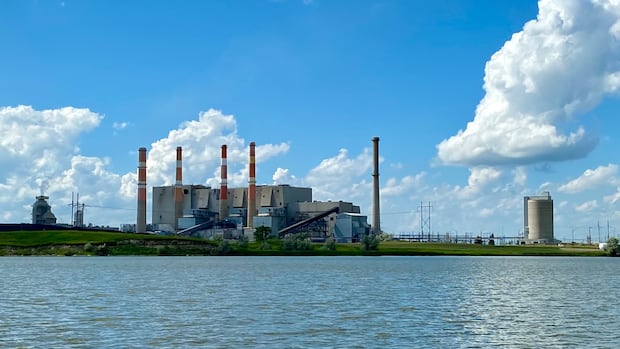

A recent study indicates that refurbishing Saskatchewan’s coal-fired power plants may incur costs as high as $46.4 billion over the next two decades.
This amount significantly exceeds the $26 billion estimate found in internal documents leaked from SaskPower, which projected expenses over a period of 25 years.
Brett Dolter, an associate professor in the economics department at the University of Regina, aimed to assess the financial implications of Saskatchewan’s strategy to maintain its coal plants as a transitional solution towards nuclear energy and the development of Small Modular Reactors (SMRs).
According to Dolter’s findings, this approach will be costlier and generate more pollution compared to decommissioning the coal plants and investing in a mix of natural gas facilities and renewable energy sources, which had been the province’s earlier strategy before it changed course in early 2025.
“If we can select an option that reduces costs, lowers emissions, and saves individuals over $800 annually on average, that seems to be a clear benefit,” Dolter remarked.
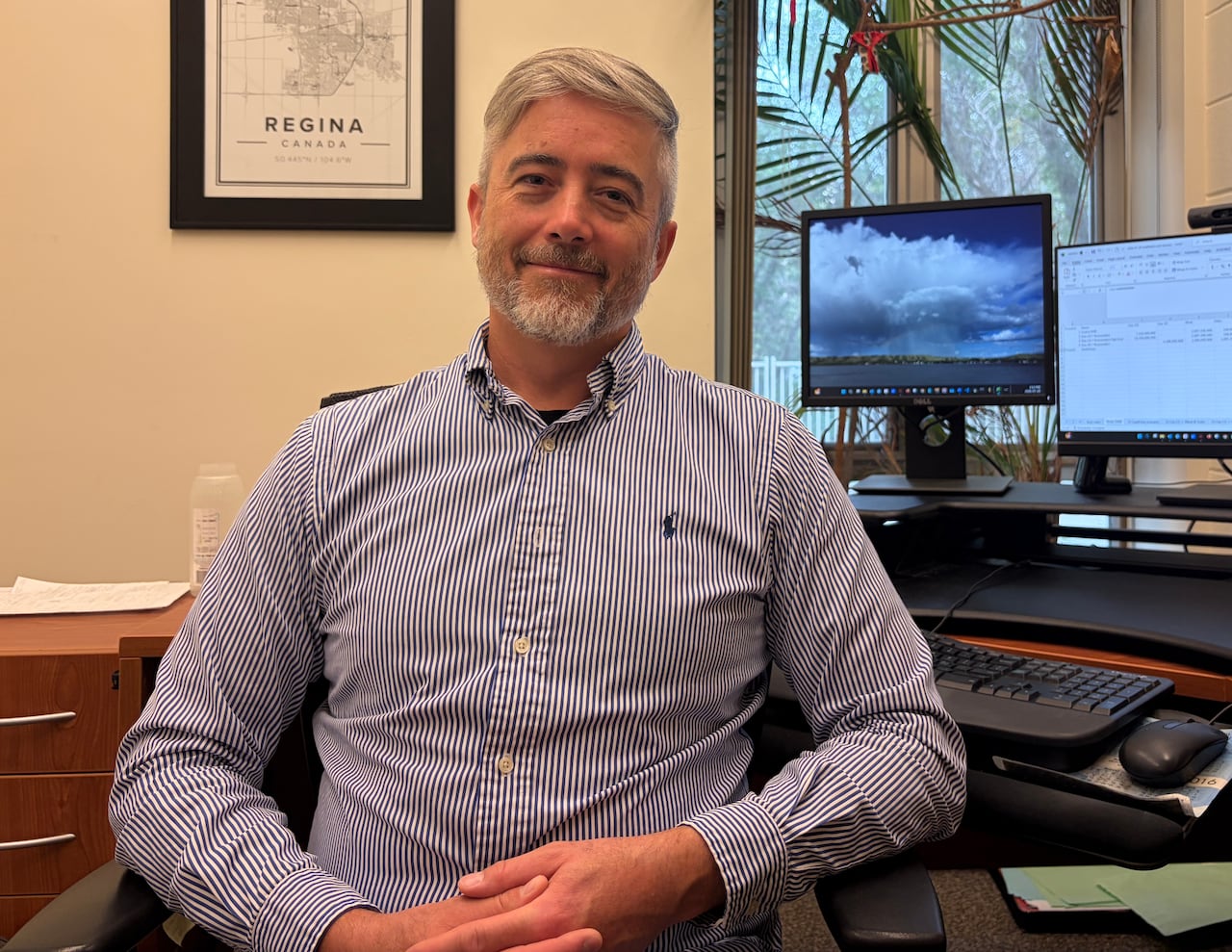
Brett Dolter, an associate professor in the University of Regina’s Department of Economics, poses for a photograph in his office in Regina, Saskatchewan, on July 28, 2026. (Alexander Quon/CBC)
Dolter’s study utilized information derived from internal SaskPower documents disclosed by the Saskatchewan NDP, data provided to the province’s rate review panel, and some assumptions due to the lack of transparency from the provincial government regarding its internal assessments.
He noted that savings become even more apparent when carbon pricing is incorporated into the calculations.
Without carbon pricing applied to major polluters, the cost of further investment in coal could reach $30.2 billion over the next two decades.

A final decision on whether an SMR will be constructed in the province is not anticipated until 2029. If granted approval, construction might commence as soon as 2030, with the first SMR in Saskatchewan expected to be operational by 2034. CBC Saskatchewan reporter Alexander Quon explains the rationale behind the province’s interest in establishing one.
When carbon pricing is included, the total projected cost rises to $46.4 billion, according to Dolter, who calculated this figure by referencing values from an agreement between Ottawa and Alberta signed earlier this year.
“When carbon pricing is factored in, the costs drop significantly, often by more than half,” he explained. “Due to the substantial emissions from coal plants, the expenses associated with carbon pricing accumulate rapidly.”
He stated that the financial implications of Saskatchewan’s current trajectory are evident, but refrained from speculating on the government’s rationale for its decision if it was aware of the costs involved.
Government does not provide answers
CBC News reached out to the provincial government for a response to Dolter’s findings.
The government replied with a statement that did not directly address the inquiry.
Instead, the government emphasized that “reliable, affordable electricity is essential for Saskatchewan’s ongoing development.”
The statement reiterated the stance articulated by Crown Investments Corporation Minister Jeremy Harrison, who stated that Saskatchewan has adopted an “all-of-the-above” strategy for its energy needs.
“This means responsibly utilizing and developing the resources available in Saskatchewan while progressing toward a future powered by Saskatchewan uranium through nuclear energy deployment,” the statement noted.
A document submitted by SaskPower to the rate review panel indicated that the Crown could potentially save “over $21 billion” in projected capital costs by extending coal operations instead of adhering to clean electricity guidelines.
Just over two years ago, the province was pursuing a strategy aimed at eliminating coal.
Saskatchewan had even allocated over $10.5 million to assist the communities of Estevan and Coronach—where its existing coal plants are located—in transitioning towards other economic prospects.
Harrison’s decision to refurbish the province’s coal facilities was made in early 2025, and he has consistently highlighted the potential job losses if the province had adhered to its previous plan.
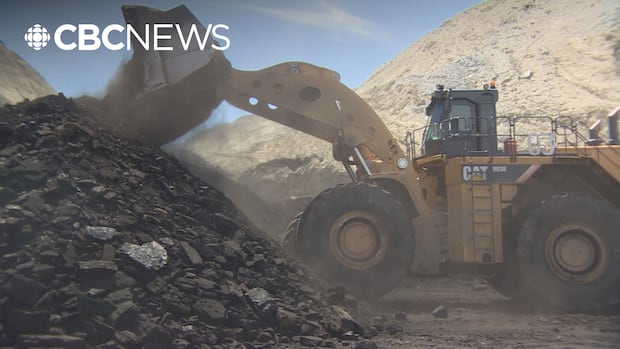
A new analysis finds the Saskatchewan government’s decision could cost up to $46.4 billion over the next 20 years. Meanwhile, the mayor of Estevan says the city projected it would lose a third of its population without coal.
‘Lose up to a third of our population’: mayor
Estevan, home to around 11,000 residents, thrives due to the natural resources in its vicinity. The city’s population has fluctuated in response to the boom-bust cycles of the oil and gas industry.
Mayor Tony Sernick is well-acquainted with this cycle, having worked in the oil sector before venturing into politics.
Sernick stated that the closure of coal-fired plants in Saskatchewan would have serious repercussions for the city.
“Before the announcements regarding coal and nuclear energy, we were preparing as a city to potentially lose up to a third of our population,” Sernick noted.

Mayor Tony Sernick stated that the City of Estevan was anticipating a loss of one-third of its population with the closure of coal-fired power plants. (Alexandre Silberman/CBC)
He believes the situation has improved since the provincial government’s decision.
There is a renewed sense of optimism, and the city is preparing for new developments in the coming years, Sernick explained.
“With the refurbishment of coal facilities and a hopeful shift toward nuclear energy, we aim to stabilize and maintain a consistent pace for the future,” he added.
Financial and legal risks
Canada’s initiative to phase out coal began as early as 2012, when the federal government under then-prime minister Stephen Harper enacted new regulations aimed at ending most coal-fired energy by the 2050s.
In 2016, the government led by then-prime minister Justin Trudeau implemented further regulations mandating the closure of all coal power plants after 50 years of operation, or by 2030, whichever comes first.
Saskatchewan’s government had previously indicated its commitment to comply with these regulations.
Harrison has explicitly dismissed those earlier commitments, stating that the federal regulations on clean electricity and coal-fired power are “unconstitutional.”
“We will continue to operate our coal plants beyond 2029 and have been very transparent about that,” he stated.
Should SaskPower adhere to the provincial government’s directive to contravene Canada’s clean electricity regulations, coal regulations, and carbon pricing, the province risks legal challenges on multiple fronts, Dolter warned.
Carbon pricing has already been deemed constitutional, and the government appears prepared to face legal action regarding these issues. This could lead to significant repercussions, he added.
“In the worst-case scenario, we invest heavily in refurbishing these coal facilities, say $2.6 billion, and then lose court cases, forcing us to shut them down,” Dolter cautioned.
“Thus, we would have squandered $2.6 billion.”