

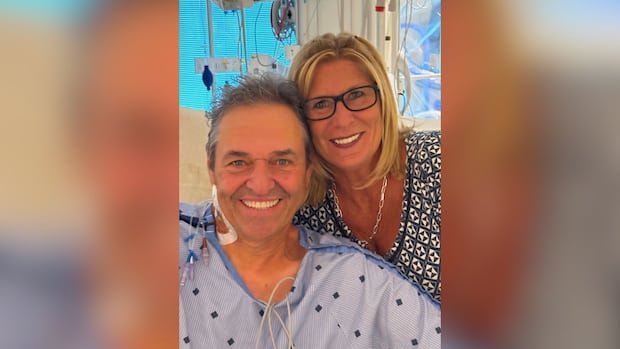

A 64-year-old man from Quebec has become the first individual in North America to undergo a liver transplant using an innovative technology that has the potential to increase the availability of transplantable livers significantly. Gérard Landry, a resident of Nouvelle in Quebec, had been grappling with liver issues for approximately 15 years, which had progressed to cirrhosis and liver cancer.
Before Landry’s liver transplant surgery at the Centre hospitalier de l’Université de Montréal (CHUM) in Montreal, his doctor revealed that his new liver had been regenerated using a novel machine called Liver Assist. This technology allows medical professionals to assess and treat donated livers outside the body before transplantation, making it possible to use organs that may have previously been deemed too risky.
Dr. David Hénault, a liver transplant specialist at CHUM, led the team that performed Landry’s surgery and has been working on this technology for about three years. The Liver Assist system functions by connecting a donated liver to a machine that circulates an oxygen-rich fluid through the organ, aiding in reversing damage caused by oxygen deprivation. Subsequently, doctors can transition to a blood-based solution to evaluate the liver’s functionality in conditions resembling the human body.
The implementation of Liver Assist has the potential to make an additional 20 to 24 livers available for transplantation in the first year alone, according to estimates from the CHUM team, with this number expected to increase as the technology becomes more widespread. This advancement is a significant boost to the current liver transplant process, which typically involves around 70 procedures annually at CHUM.
Landry’s post-transplant recovery has been exceptionally positive, with early indications showing successful results. He is currently undergoing regular blood tests at the hospital to monitor his progress, with plans to return to Gaspésie in eastern Quebec once he is fully recuperated. Landry hopes that his journey will inspire others to have conversations about organ donation, emphasizing the importance of having available organs for medical advancements to be effective.
In Landry’s words, “if you have a horse without a rider, you don’t have a ride,” highlighting the critical role of organ donation in saving lives.