

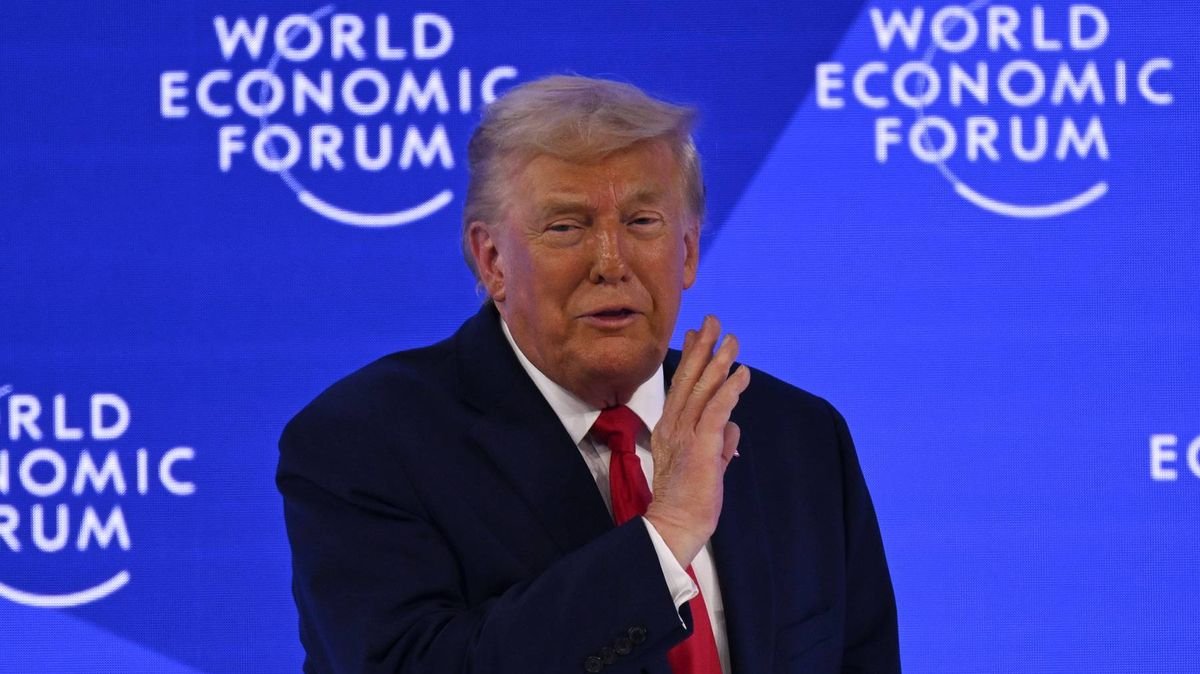

During the recent World Economic Forum address, President Donald Trump’s body language and speaking style were analyzed by a psychotherapist and behavioral expert. The US leader discussed various topics with world leaders and financial figures in Davos, Switzerland, including his interest in acquiring Greenland and his perspectives on China and NATO.
Shelly Dar, a mental health therapist with extensive experience, highlighted Trump’s controlled presentation. She noted the rigidity in his body language during the initial part of the speech, emphasizing how his posture and hand placement at the podium limited behavioral cues typically observed in lower body movements.
Dar observed that Trump’s deliberate concealment behind the podium aimed to project containment, limit emotional leakage, and reinforce authority. When Trump eventually moved away from the lectern, his demeanor visibly changed, showcasing more confidence and expressiveness through gestures and variations in speech.
According to Dar, Trump’s communication approach prioritizes dominance over dialogue, certainty over nuance, and assertion over persuasion. This authoritative stance contrasts with the collaborative nature of the Davos setting, signaling Trump’s confidence in his established authority rather than adapting to the environment.
Dar explained that Trump’s dominant personality style, characterized by a lack of adaptability to the room’s energy, can be perceived as both a strength and a rigidity by different individuals. Trump’s presence is described as setting the tone of the room rather than blending in or fostering collaboration.