

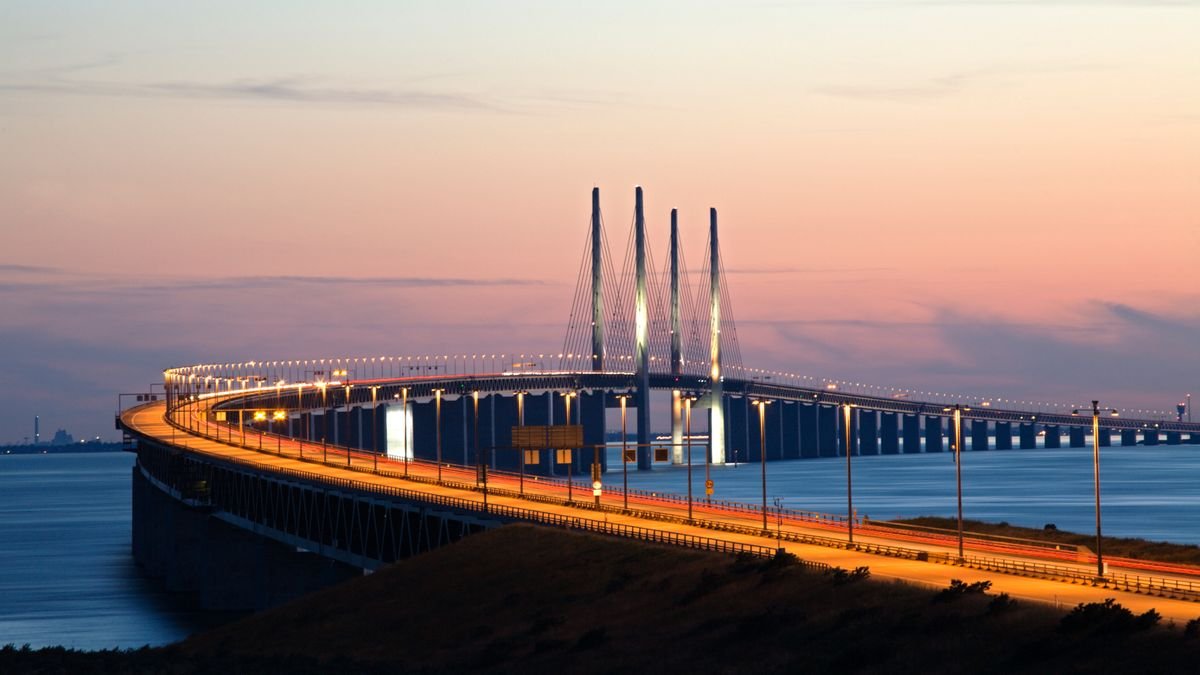

In a single day, travelers can explore both Denmark and Sweden using a unique ‘disappearing bridge’ that links the two countries. Known as Øresund in Danish and Öresund in Swedish, this remarkable structure transitions from a bridge to an underwater tube tunnel, creating an illusion of disappearing beneath the ocean’s surface. Completed in 2000, the Øresund Bridge connects Copenhagen and Malmö, serving as the second longest rail and road bridge in Europe.
Symbolizing unity and cooperation between nations, the Øresund Bridge is a significant landmark in the region. Comprising an 8km bridge, a 4km underwater tunnel doubling as an artificial reef, and a 4km manmade island named Peberholm, the bridge witnesses a daily footfall of 70,000 people. The project, costing £2.3 billion to construct over five years, was a collaboration between Swedish company Svedab and Danish firm A/S.
Equipped with a motorway exit for authorized vehicles and a helicopter pad for emergencies, the Øresund Bridge charges varying crossing fees based on the mode of transport. The structure, approximately 16km long, was designed with a tunnel to avoid radio signal interference from nearby Copenhagen Airport and to ensure a continuous shipping channel. Recognized with the IABSE Outstanding Structure Award, the Øresund Bridge has significantly boosted the economic prospects of Denmark and Sweden, fostering a trading region of 4.2 million people known as the Øresund Region.
The success of the Øresund Bridge extends beyond economics, as it has become a cultural icon featured in popular media like the TV series The Bridge. Celebrated for its engineering marvel and positive impact on the region, the Øresund Bridge stands as a testament to international collaboration and innovation.