

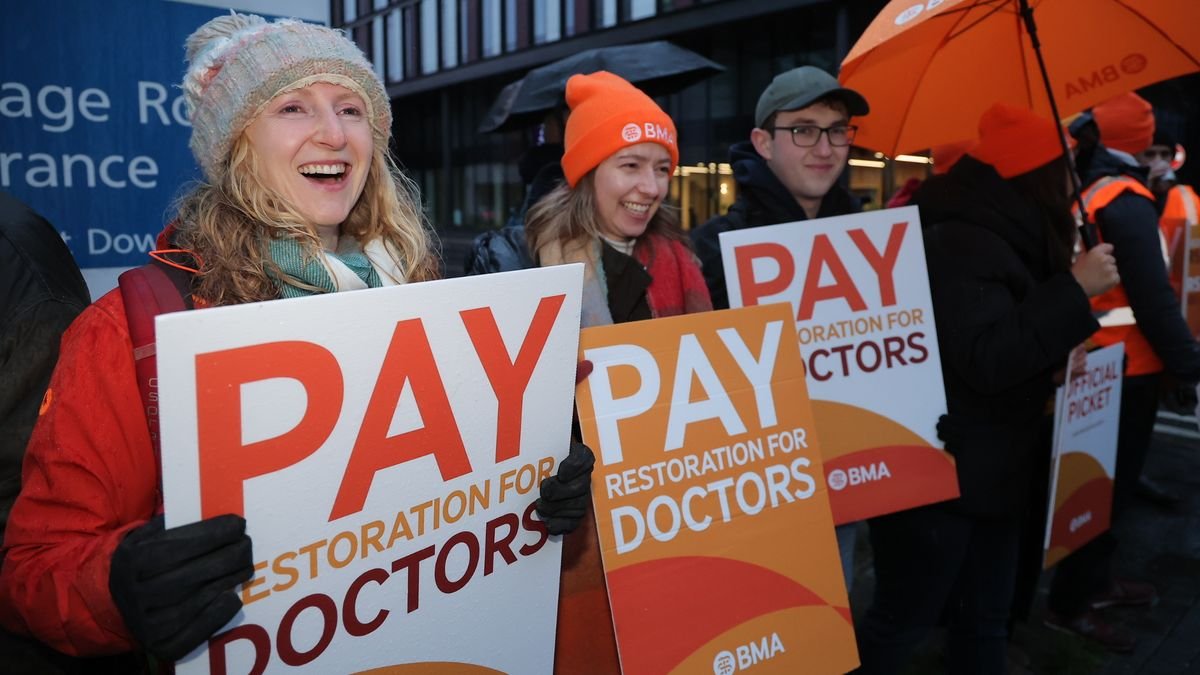

Hospital administrators have raised concerns that NHS surgeries may need to be postponed until after the New Year due to a five-day strike initiated by doctors leading up to the Christmas holiday. Despite this, doctors participating in the strike across the nation have emphasized their aim to enhance patient care and retain medical professionals within the NHS instead of seeking opportunities abroad.
The ongoing dispute stems from the Health Secretary’s refusal to increase the proposed 5.4% pay raise for 2025/26, sparking a contentious exchange with the British Medical Association (BMA) leadership. As a result, Nick Hulme, the chief executive of the East Suffolk and North Essex NHS Foundation Trust, acknowledged the potential consequences of the strike on service continuity, with a likelihood of operation cancellations extending into the new year.
Approximately 70,000 scheduled operations and appointments face potential cancellations during this period, leaving many patients uncertain about the rescheduling of their treatments. Dr. Layla McCay, a representative of the NHS Confederation, highlighted the anticipated impact of the strikes on waiting lists and the disruption expected to persist well into January and beyond.
Resident doctors, including Dr. Shivam Sharma, have mobilized outside hospitals like St Thomas’ in London to voice their dissatisfaction with the current offer, citing concerns over job availability and remuneration. The NHS Confederation has urged for third-party mediation to resolve the prolonged dispute between the BMA and the government, which has led to 14 strikes since 2023.
In response to the doctors’ demands, the BMA has advocated for a 26% pay increase over the coming years, citing a decline in real wages since 2008. However, the government has defended its position, pointing out recent real-term pay increments and proposing measures to address training shortages and streamline career progression for doctors.
Despite the government’s efforts to reach a resolution, challenges persist as hospitals brace for the strike’s impact on staffing levels during a period of heightened demand, particularly with a surge in flu-related hospitalizations. Dr. Jack Fletcher, chair of the BMA’s resident doctors committee, disputed claims of a severe flu crisis, emphasizing the annual nature of flu peaks and asserting that the current situation reflects the early onset of the season rather than an unprecedented health crisis.
While negotiations continue, the NHS faces ongoing strain due to staffing shortages, prompting calls for immediate action to alleviate the pressures on healthcare services and ensure the delivery of essential medical care.