

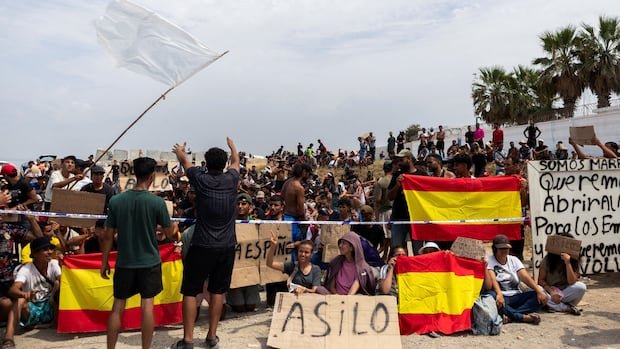

Hundreds of migrants, part of the large group that entered Spain’s Ceuta from Morocco, gathered at a busy urban beach in protest on Sunday, calling for asylum instead of being returned to Morocco. Following the mass border crossing two weeks ago, which saw an influx of over 72,000 individuals into the territory of about 80,000, around 5,000 to 8,000 migrants remain in Ceuta. Due to limited resources in the city, most migrants are living in challenging conditions on El Trampolin beach or on the outskirts, hoping for an opportunity to continue their journey to mainland Europe.
Ayoub Elarroud from Tetouan, Morocco, expressed the hardships faced by migrants, mentioning the difficulties of sleeping near the sea with cold and unpleasant odors, while also noting restrictions imposed by the police. The protesters displayed Spanish flags and banners with messages such as “We don’t want to go back to Morocco” and “We are also human,” while vocalizing their exhaustion and need for a solution.
On the rocky shores, some migrants were seen washing clothes or fishing with makeshift bamboo rods. Interior Minister Fernando Grande-Marlaska stated that irregularly entering migrants would not be permitted to stay in Ceuta, travel to mainland Spain, or attain legal status, except for extreme vulnerability cases.
Ceuta’s medical board head, Enrique Roviralta, highlighted the strain on health services, mentioning the exhaustion of limited healthcare workers and a slow response from the central government. He noted the outbreak of diseases like infectious diarrhea and scabies, along with an increase in violence-related injuries. Health Minister Monica Garcia refuted claims of health services collapsing but acknowledged the pressure they were under, emphasizing the unjustness of associating migration with illness.
Moroccan migrants interviewed explained that they were driven by poor working conditions in their country, despite their qualifications. They shared their struggles, with individuals like Mohammed Ouanzar expressing the impossibility of affording a home or starting a family with low salaries in Morocco. Migrants like Emmanuel from Nigeria embarked on perilous journeys seeking better opportunities for their families, willing to take any job offered.
The migrants’ stories underscore the challenges faced by individuals seeking asylum in Ceuta, with various reasons compelling them to make the dangerous journey in search of a better life.