

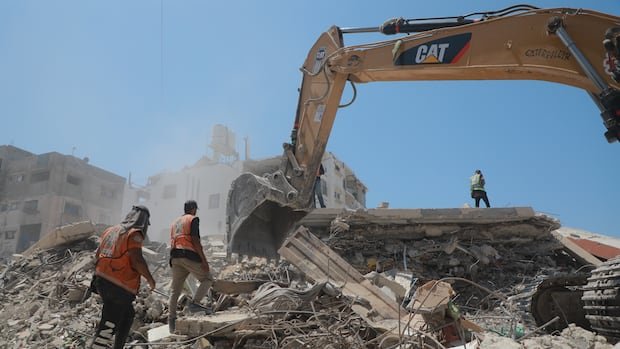

In Gaza City, the Al-Drimli family is using basic tools like shovels, buckets, and a wheelbarrow to search for the remains of a friend and neighbor in the wreckage of their former residence. Despite the scorching sun, the men labor diligently, with the clinking of shovels and the hum of an electric saw filling the air as they clear debris from a six-story building struck by an airstrike in November 2023.
Having already found the remains of their own family members, the Al-Drimli family now seeks to locate the missing neighbor who had sought refuge with them during the building’s destruction. According to the Gaza Health Ministry, an estimated 8,000 to 10,000 bodies remain trapped under rubble nearly three years after the conflict between Israel and Hamas began.
Facing a scarcity of excavators in Gaza, the Al-Drimli family and many others have resorted to manual labor due to the high costs and limited availability of heavy equipment. With only around a dozen barely operational excavators in the strip, officials and equipment operators struggle to maintain the machines amid ongoing challenges such as shortages of spare parts, oil, and fuel.
Samir Sabra and his son, Uday Sabra, operate two of the few functioning excavators in Gaza. Samir highlighted the exorbitant cost of running an excavator, emphasizing the financial strain it imposes. The duo, inundated with requests for their services, expressed concerns about the insufficient equipment available to address the overwhelming demand, given the extensive devastation in the region.
The Palestinian Civil Defence, working alongside volunteers like Uday Sabra, faces an uphill battle in recovering remains from the rubble due to the scarcity of heavy machinery. Mahmoud Basal, a spokesperson for the Civil Defence, noted that excavators were deliberately targeted during the conflict, further exacerbating the equipment shortage for recovery efforts.
Despite ceasefire agreements and promises of increased access to heavy equipment, the situation on the ground remains unchanged, prolonging the arduous task of retrieving bodies buried beneath the debris. Humanitarian aid groups have pointed out that Israeli restrictions on essential supplies like fuel, oil, and spare parts hinder efforts to maintain crucial machinery, impeding the recovery process in Gaza.
In response to these challenges, the international community is urged to intervene and facilitate the entry of machinery into Gaza to expedite the recovery and reconstruction efforts. The IDF, citing security considerations, maintains control over the entry of heavy equipment into the strip, emphasizing compliance with international law and directives from the political leadership.
Despite the obstacles, individuals like Uday Sabra persist in their mission to provide closure to families mourning their lost loved ones by tirelessly excavating the rubble, determined to help bring peace to the departed souls.