

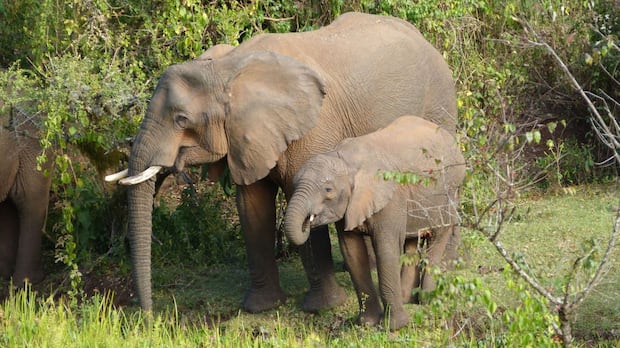


A seemingly ill elephant gnaws on the bark of a tree commonly utilized in traditional remedies. Meanwhile, a mother elephant blends a plant with recognized healing properties into her milk to nourish her calves.
These instances are among the many anecdotes collected from local wildlife scouts and community members regarding African elephants in the Mount Elgon area of Kenya.
“At this point, I’m no longer surprised,” stated Elodie Freymann, who investigates self-medication behaviors in animals, during her conversation with As It Happens guest host Helen Mann.
“Given the intelligence and intricate social structures of elephants, it was only a matter of time before we discovered the wide variety of medicinal plants that elephants utilize in their natural habitats.”
Freymann, a co-author of a recent study, published on Thursday in Nature, leverages local insights to catalogue numerous medicinal plants employed by elephants in Mount Elgon.
According to the researchers, this study contributes to an expanding collection of evidence that highlights the complexity and intelligence of elephants, emphasizing the necessity of conserving the biodiversity they depend on.
However, scientists warn that further investigation is essential to definitively conclude that these elephants are indeed practicing self-medication.
Leveraging local insights
The research findings stem from interviews with eight members of the Sabaot community, who have coexisted with the elephants for many years, including wildlife scouts, village guides, and elders.
In certain instances, they recount stories of elephants that seem weak, sluggish, or suffering from digestive issues, actively seeking out particular plants employed in local medicinal practices. In other accounts, they describe mother elephants administering known medicinal plants to their offspring.
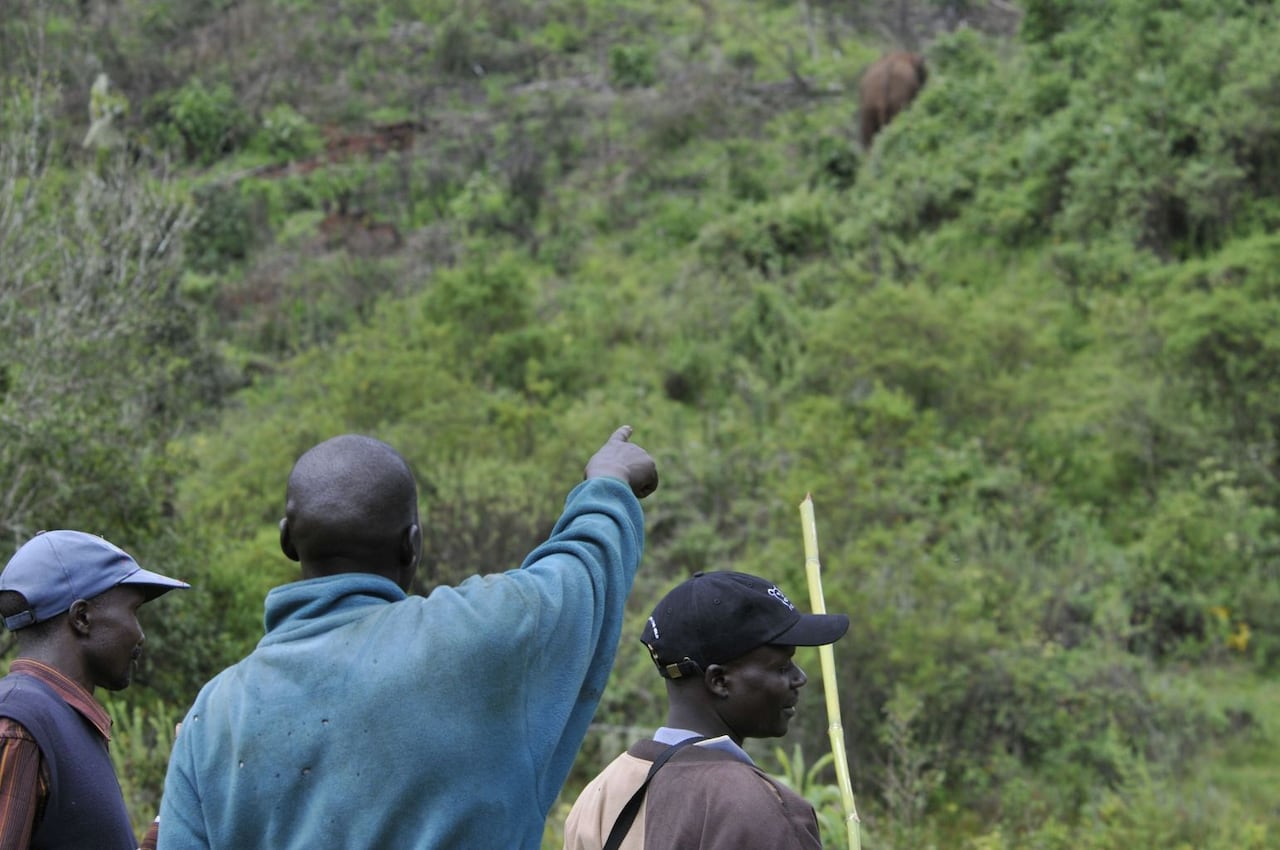
A community member from Mount Elgon identifies elephants in the distance. (Stephen Powles/Mount Elgon Foundation/Bernhard Nocht Institute for Tropical Medicine)
Among the 35 plants mentioned in the interviews, 34 are recognized for their use in traditional medicine. Notably, eight of the nine most frequently referenced plants have been documented in scientific studies for their pharmacological effects.
“We consulted the primary sources. We engaged with individuals who have cohabited with these elephant populations for countless years,” remarked Freymann, a post-doctoral fellow at Brown University in Rhode Island.
“For too long, Western science has overlooked these local perspectives, and it’s time to change that.”
Additional evidence required
Chase LaDue, an elephant ecologist not involved in the study, expressed that while the research serves as an excellent foundation for future studies, it does not conclusively demonstrate that elephants are purposefully self-medicating.
“There was no health data indicating any of these elephants were actually unwell, nor was there any measurement to determine if consuming these plants resulted in any changes,” said LaDue, who is a curator at the Oklahoma City Zoo and the executive director of the Sri Lanka Elephant Project, in an email.
“Young calves frequently explore their mothers’ mouths with their trunks, sampling whatever she is chewing. This behavior is a primary method for them to learn about their diet. It’s plausible that something similar is being interpreted here through a medical viewpoint. I would prefer to see concrete evidence before labeling it as medicine.”
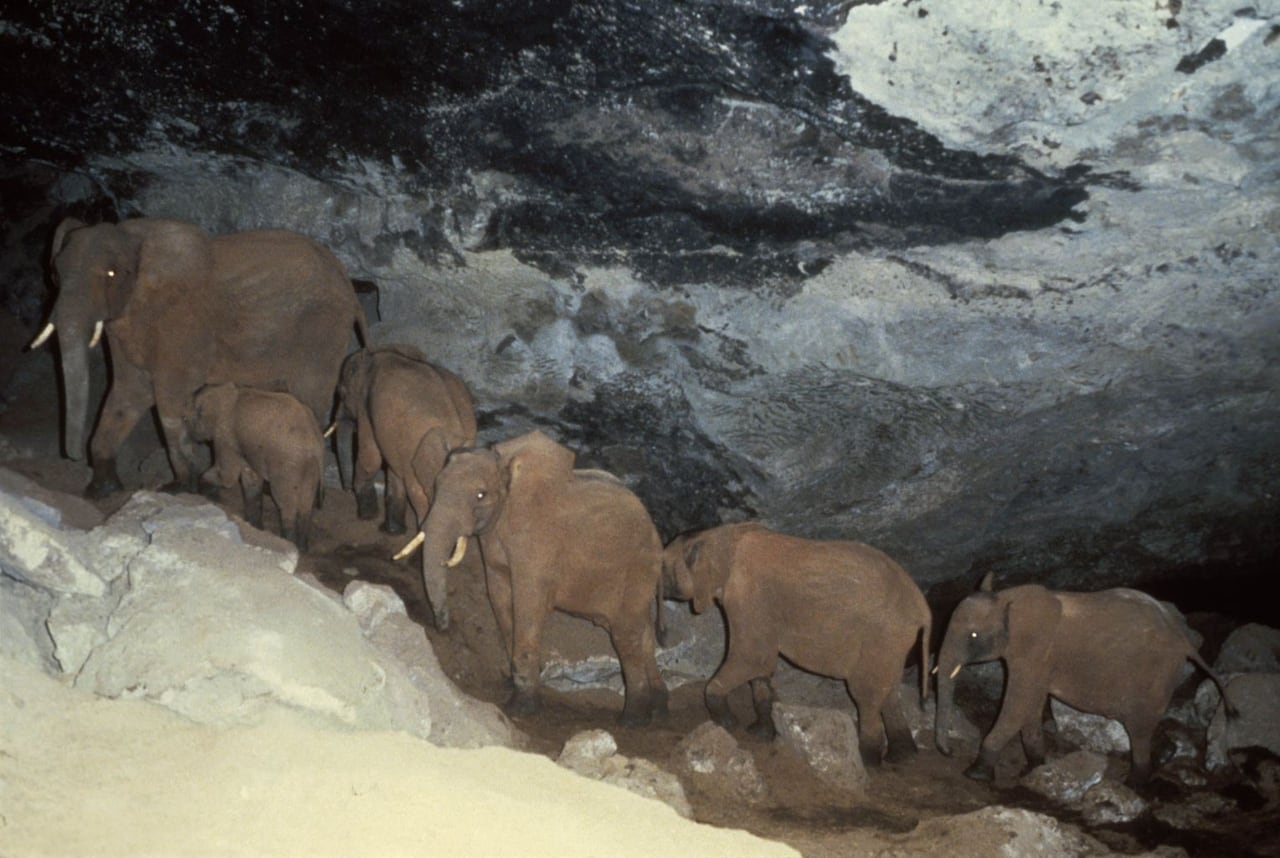
Mount Elgon elephants, known for their salt-mining habits, explore caves and scrape rocks to obtain necessary minerals. (Ian Redmond/Bernhard Nocht Institute for Tropical Medicine)
He notes that local knowledge can often guide researchers effectively, but anecdotal evidence has its limitations.
“If you grow up knowing that a certain plant alleviates stomach issues in humans, and you observe an elephant consuming it, it’s natural to make a connection. However, elephants consume a vast array of plants. In such a botanically diverse area, it would be surprising if many of them lacked some traditional medicinal application,” he stated. “Overlap alone doesn’t provide substantial insight.”
Freymann believes it is unlikely that elephants are consuming medicinal plants purely out of preference, as these plants often contain compounds that are bitter and unpalatable.
“In small quantities, these substances act as medicines, but in larger amounts, they can be toxic,” she explained. “These compounds are produced by the plants as a defense mechanism against herbivores, such as caterpillars, that attempt to consume them.”
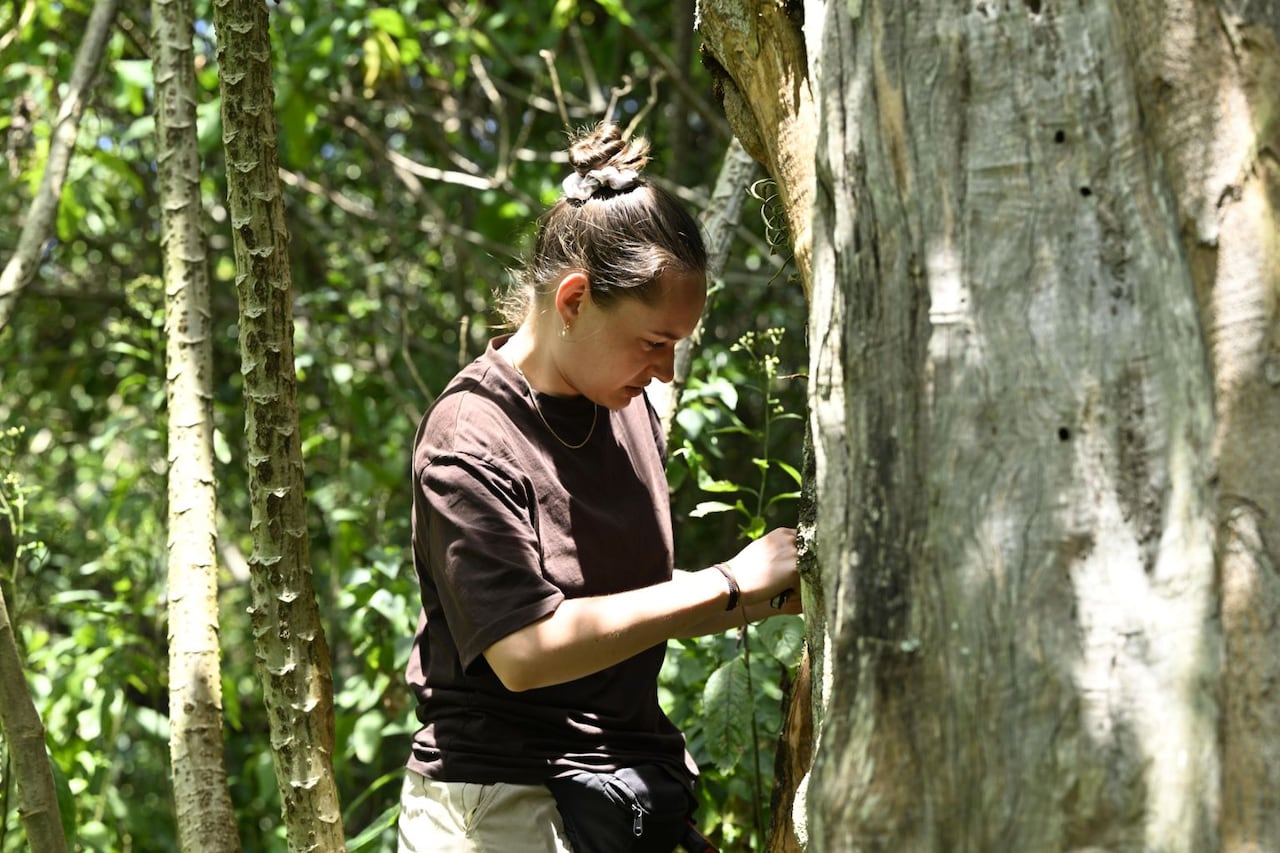
PhD student Henrike Wurm collects a bark sample in the Mount Elgon region of Kenya, where elephants have been observed consuming medicinal plants. (Kevin Maima/Mount Elgon Foundation/ Bernhard Nocht Institute for Tropical Medicine)
However, she concurs that this study is merely the beginning. Her team has equipped the interviewees with cameras to capture footage of elephants consuming these plants. She indicates that analyzing this footage will be the next phase of their research.
“We have an exceptional foundation for conducting further investigations in this area,” she remarked.
-
When an earthquake hit, these elephants formed a protective circle around their youngest
-
Elephants may have names for each other that humans don’t know, study finds
Should the researchers validate that elephants are indeed practicing self-medication, they would join a growing list of animal species exhibiting similar behaviors, including chimpanzees, other great apes, as well as some insects and birds.
This underscores the necessity of advocating for biodiversity, according to Freymann.
“The degradation of habitats results not only in the loss of food sources for wildlife but also in the elimination of potential medicinal resources,” she stated.
“In a world experiencing significant climatic changes and ecological shifts, it is imperative that animals have access to the medicines essential for their survival and well-being.”
Tag: rewrite-pending