


It is widely recognized that data centres utilizing artificial intelligence are significant users of electricity. However, it remains uncertain whether this will lead to increased energy prices for consumers in Alberta.
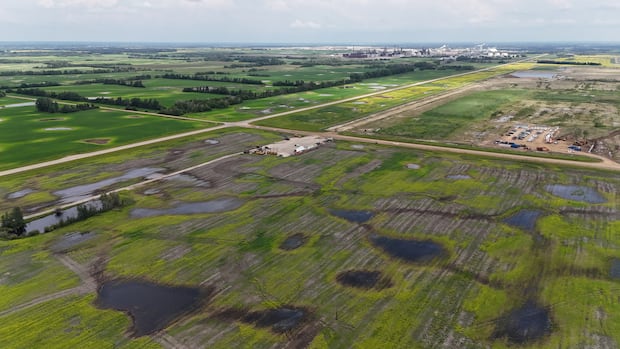
The proposed Meta Data Centre in Sturgeon County, Alberta, which ranks among the largest data centres suggested for the region, could cause household energy expenses to rise between $270 to $460 annually once it becomes operational, as reported by the Pembina Institute, a clean-energy think tank.
David Pickup, the Pembina Institute’s energy director, remarked, “The prospect of an average increase of hundreds of dollars in bills over the coming years serves as a stark reminder of the potential repercussions these projects may have.”
Data centres are physical locations that host the computing equipment necessary for storing and distributing data for various technology applications that utilize AI.
According to the U.S. Department of Energy, data centres accounted for 4.4 percent of the electricity demand in the U.S. in 2023, with projections suggesting this figure could escalate to 12 percent by 2028.
In July, Meta Platforms Inc., the parent company of Facebook and Instagram, disclosed plans to construct a $13 billion data centre complex, which is anticipated to be operational within the next two to three years.
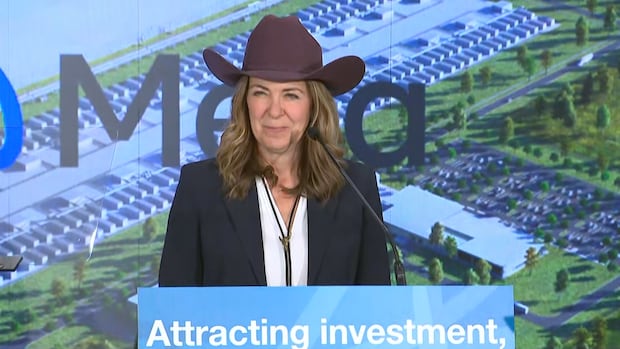
On Wednesday, Meta announced plans for a large AI data centre in central Alberta, marking the company’s first such facility in Canada. Premier Danielle Smith, along with other government and Meta representatives, introduced the 1-gigawatt data centre, which has raised concerns about its energy consumption.
This facility will be connected to a nearby power plant, the $4.6 billion Greenlight Electricity Centre, which is designed to generate 932 megawatts of power, with the potential to eventually double that output.
Nevertheless, Meta holds rights to connect to Alberta’s electrical grid prior to the Greenlight plant becoming operational, which is projected for late 2030.
Both the provincial government and Meta have asserted that the Edmonton-area data centre will not lead to higher electricity prices for Albertans.
However, the time gap between the centre’s opening and the construction of its power plant is a critical factor that may put upward pressure on consumer electricity rates, as indicated by the Pembina report and experts who spoke with CBC.
Supply-and-demand dynamics
Pickup noted that electricity price impacts would peak during the years prior to the Greenlight facility becoming operational and would diminish once additional energy supply becomes available. This estimation places that period between 2027 and 2031.
Kent Fellows, an economics associate professor at the University of Calgary, stated that a project of the scale of Meta’s data centre could influence electricity prices if new energy generation does not coincide with its launch.
“A data centre that consumes significant electricity, comparable to that of a large town or small city, will undoubtedly affect the market if it doesn’t have its own power generation,” Fellows explained.
The absence of a dedicated power plant for Meta could lead to elevated wholesale electricity prices, according to Fellows.
In Alberta, when wholesale electricity rates rise, retailers have the ability to adjust their prices to accommodate their expenses and profit margins.
Fellows indicated that the influence would lessen once Meta’s generation capacity becomes operational.
“It’s essential to remember that this operates like any other market,” Fellows remarked. “There are aspects of supply and demand.” Werner Antweiler, a professor at the Sauder School of Business at the University of British Columbia, mentioned that Meta might require nearly one gigawatt of power to operate.
This demand represents about 10 percent of Alberta’s current generating capacity. In contrast, the city of Edmonton has a load of approximately 1.4 gigawatts, as reported by the Alberta Electric System Operator.
“This will strain the supply cushion,” Antweiler stated, referring to the extra electricity available to the power grid to avoid blackouts during sudden plant failures or spikes in demand.
“Eliminating the supply cushion in the grid will push prices higher as peak load plants are utilized more frequently,” he added.

Demonstrators gathered in Morinville, Alberta, on Sunday to protest the proposed Meta data centre in Sturgeon County. Ben Baril organized the protest last weekend.
Antweiler suggested that the Pembina Institute’s estimate of a 15 percent increase in electricity prices is reasonable. However, he emphasized the considerable uncertainty surrounding whether the increase could be 10 percent, 15 percent, or even 25 percent.
“These figures are not easily dismissible, as they align with my observations of projected demand,” he added.
A cumulative effect
The Alberta government is actively seeking to attract technology giants like Meta and Google to invest in the province.
By the end of 2024, Technology and Innovation Minister Nate Glubish mentioned that Alberta aims to have $100 billion in data centres under development within five years.
The Pembina report, while specifically addressing the Meta data centre, indicates there may be a cumulative effect.
“We foresee similar, substantial, and long-lasting impacts as additional data centres are constructed in Alberta,” it states.
-
Meta building its first Canadian data centre northeast of Edmonton
-
Alberta premier offers reassurances on massive Meta data centre
Pierre-Olivier Pineau, an energy policy expert at HEC Montréal, indicated that the potential effects would extend beyond Meta.
“An increase in load signifies rising demand, which places pressure on supply,” Pineau explained. “When demand increases, prices also rise as a natural market response.”
Pickup stated that renewable energy sources, battery storage, and other technologies could help bridge that gap, along with requirements for data centres to reduce their electricity consumption during peak demand periods.
In a video shared on social media last month, Premier Danielle Smith assured that if electricity supplies become constrained, the needs of Albertans’ homes would be prioritized, as the province’s grid emergency protocols prioritize households and essential services over industrial users.
“These projects can have significant impacts, but they don’t necessarily have to,” Pickup asserted.
“Policy decisions will ultimately determine whether these projects have a substantial negative impact on consumers or serve as assets to the grid that can lower costs.”
Pickup added that alternative energy sources like solar and wind could alleviate some of the timing and cost challenges associated with launching a new gas power plant.
Utilizing gas power plants to supply electricity to the Meta data centre may exert additional pressure on natural gas prices, Pickup noted.
Alberta, Meta say no price increase
With the potential for more data centres to emerge, the federal government recently introduced new principles for responsible data centre development, which stipulate that these facilities should not transfer electricity costs to Canadians.
Other principles include ensuring that data centres deliver lasting local benefits, minimize their environmental footprint, maintain transparency regarding local impacts, and provide strategic value to Canada.
To date, 42 organizations across Canada, including Meta, have endorsed this framework.
A Meta spokesperson stated to CBC that the report is based on hypothetical scenarios and emphasized that they will finance new generation and grid infrastructure, which is expected to lower prices for Albertans.
“Meta will cover the complete costs associated with energy upgrades and the electricity utilized by our Sturgeon County data centre—these expenses will not be passed on to Albertans—and we are dedicated to matching 100 percent of the facility’s electricity use with clean and renewable energy,” the statement read.
A representative from Alberta’s Minister of Affordability and Utilities informed CBC that the Pembina Institute’s analysis does not accurately reflect how Albertans manage electricity payments, stating that increased demand from data centres can attract new energy generation and potentially lower power prices.
“Our government has ensured that every Albertan has guaranteed access to a fixed-rate plan for two years, with regulated caps on any increases,” the statement concluded.