

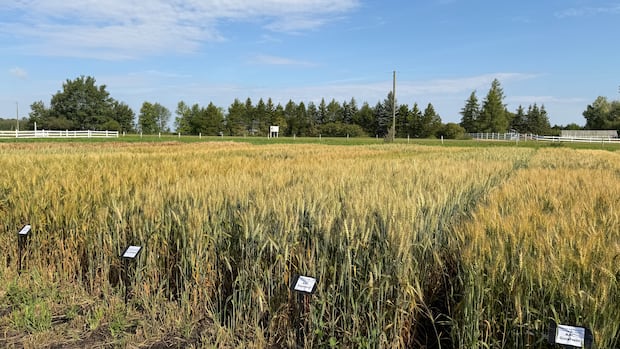

In a northeastern Alberta field, scientists are investigating a remedy for copper shortages in cattle, which can have negative impacts on their fertility and overall health, by applying the mineral to wheat crops.
Meanwhile, in a different area of the field, they are experimenting with various cover crops to determine which types can effectively control weeds, leading to a decrease in herbicide application.
“Research always sparks new ideas,” explained Jay Cory, a farmer and chair of the Lakeland Agricultural Research Association (LARA).
“You observe something, and you might want to try it, or perhaps you choose not to, but it always gives you food for thought when you head home.”
LARA, a non-profit organization dedicated to agricultural research, operates studies at its Fort Kent research site, situated roughly 250 kilometers northeast of Edmonton, between the towns of Bonnyville and Cold Lake.
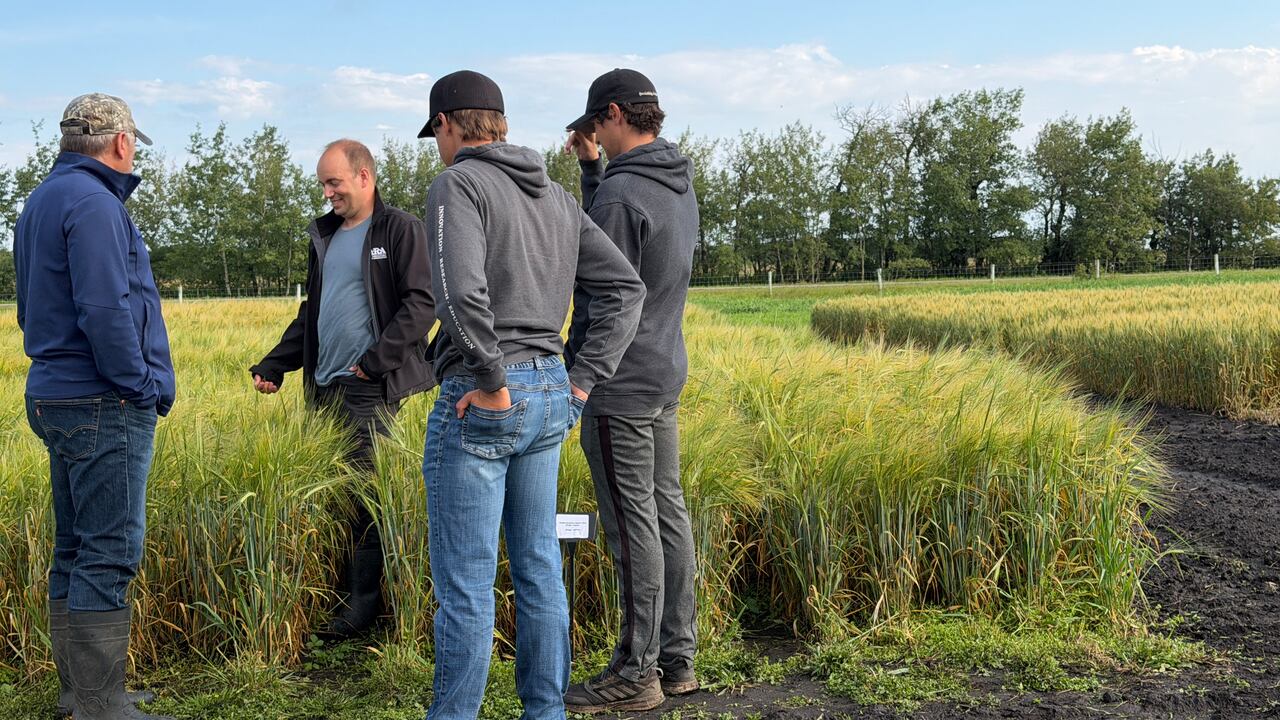
Lance Ouellette, a research agrologist for LARA, converses with producers during the Fort Kent field tour on August 11. (Jessica Campbell/CBC)
On Tuesday, local producers were welcomed to explore the facility and observe the 10 ongoing trials, which include investigations into various crop types and methods aimed at enhancing productivity and sustainability.
Farming in real-world conditions
Maria Angelica Ouellette, a research scientist with LARA, noted that the organization evaluates ideas under actual environmental conditions, including fluctuations in rainfall and temperature.
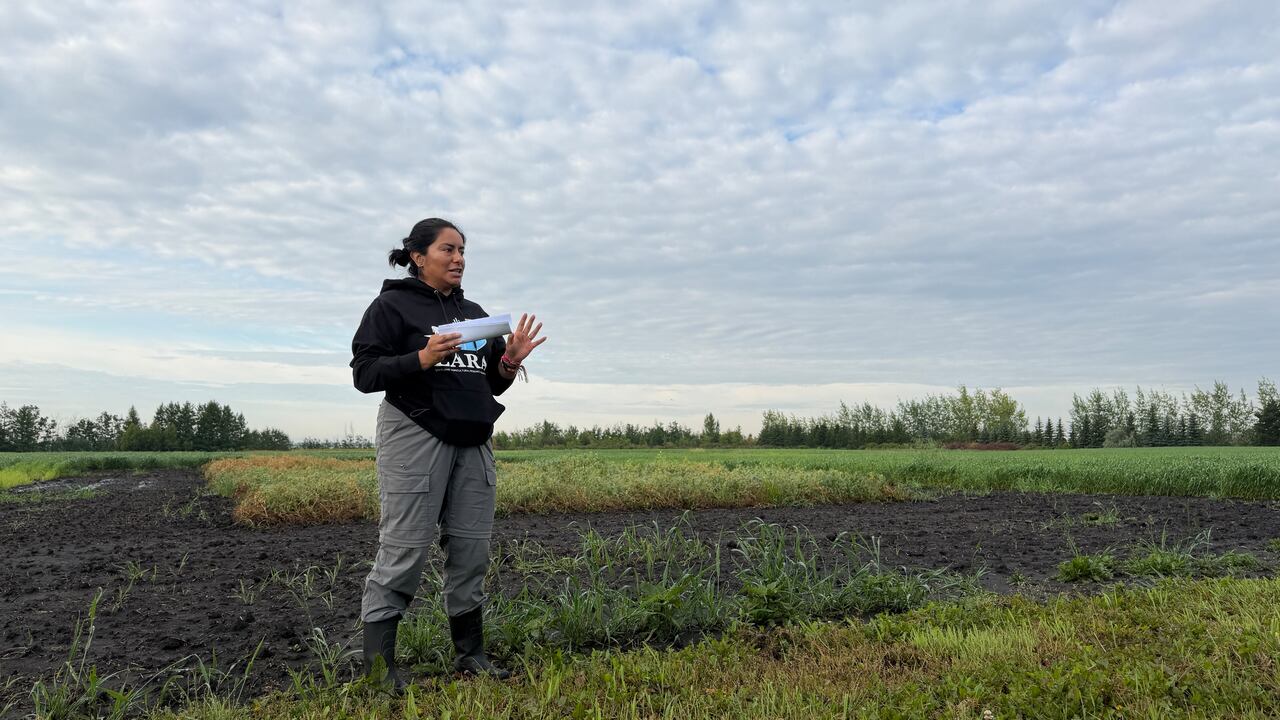
Maria Angelica Ouellette stands in a part of the Fort Kent field that has been affected by this year’s rainfall. (Jessica Campbell/CBC)
Questions raised by farmers in the area help shape the research initiatives, she added.
“The primary aim is to assist growers in achieving more sustainable crops while also enhancing productivity on their land,” she explained, emphasizing their goal of maximizing land usage for farmers.
This year’s actual conditions present the added difficulty of excessively wet weather impacting certain crops, according to Cory.
“Last year, we thought rain would be scarce, but this year, it just won’t stop,” he remarked.
These wet conditions enable researchers to evaluate how various trials react when the growing season deviates from expectations.
Ouellette stated that the program is guided by producers, meaning the research team prioritizes issues that matter to the local farmers and collaborates with those who have the best understanding of their land.
“They have observed things we may not have noticed, and they bring insights we haven’t encountered,” she mentioned.
-
How a farming initiative in Westlock County has big dreams to empower newcomers and to help feed the community
-
2 Sask. research farms slated to close will now stay open
Alyssa Krawchuk, LARA’s executive director, emphasized the importance of a localized approach, as growing conditions can differ greatly across various regions of the province.
“What is being tested in Lacombe will not reflect the same climatic conditions we experience here,” she stated.
Minimizing risk
Krawchuk indicated that the organization aims to perform unbiased, localized research and subsequently share findings with producers through events like field tours.
“We strive to absorb the risks so farmers can avoid them,” she noted.
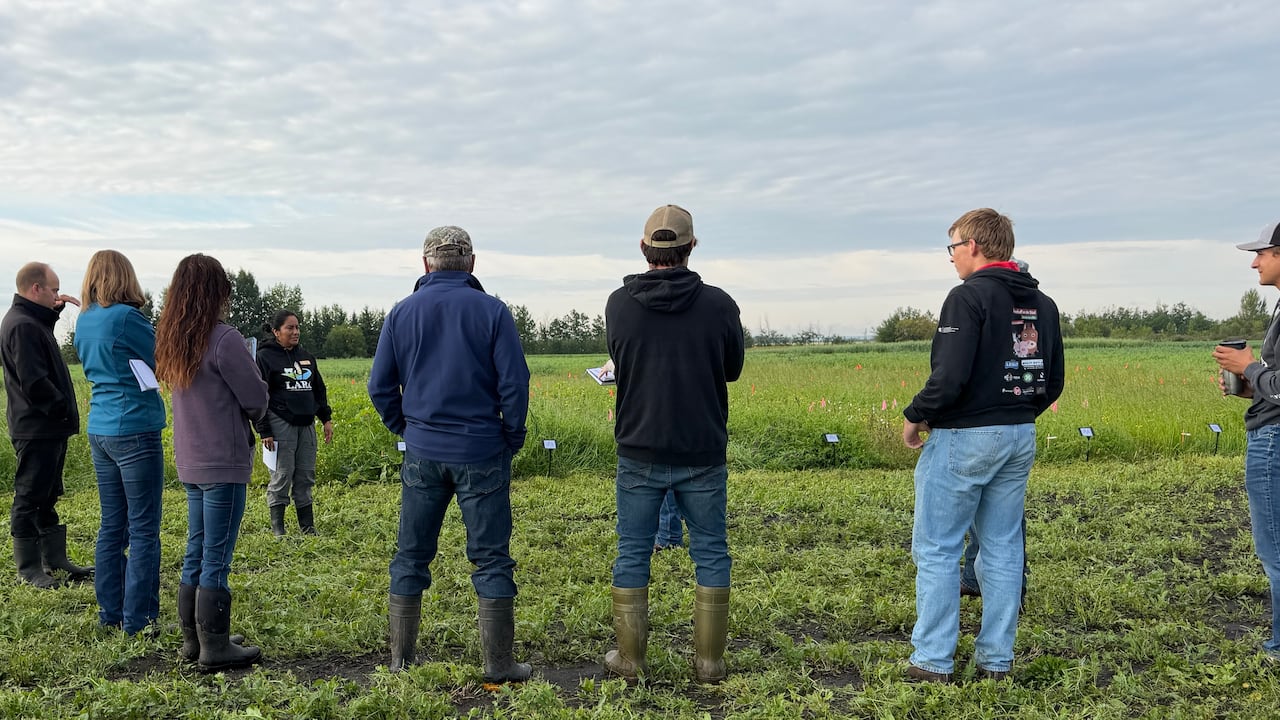
A group of farmers during the August 11 tour of the Lakeland Agricultural Research Association’s Fort Kent research field. (Jessica Campbell/CBC)
Cory added that in addition to discovering innovative solutions, LARA remains focused on fiscal considerations, pointing out that if a solution significantly raises costs, it may not be practical.
“The key factor is to assess the costs and how they affect your yield,” Cory explained.
For Neil, Jay’s father and a long-time farmer as well as one of the founding directors of the organization, this risk is very personal.
He mentioned that having a venue for testing new research in the area alleviates some of the risks associated with trying out new products or techniques.
“They can make the mistakes here, so we don’t have to repeat them at home,” he said.
“We discover new varieties here, and if we find one that appeals to us, we can implement it.”