

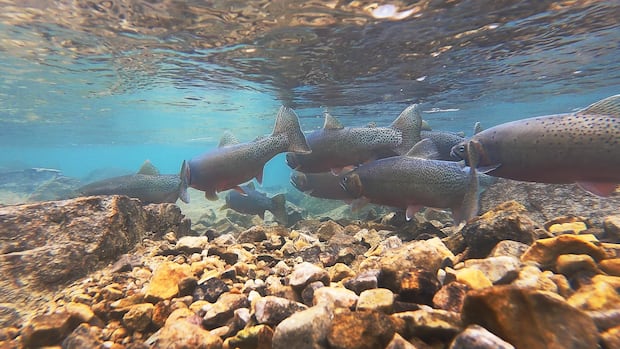

Parks Canada reports positive outcomes for a vulnerable fish species returning to its native environment in Banff National Park.
After over ten years of efforts, the federal agency announced that westslope cutthroat trout are now starting to naturally spawn and repopulate Hidden Lake, located near Lake Louise.
Shelley Humphries, an aquatic specialist with Parks Canada’s Lake Louise, Yoho, and Kootenay field unit, indicated that the population is now self-sustaining.
“It’s incredible … We won’t have to be concerned about them up there,” she stated. “We were quite confident it would succeed because similar initiatives in the United States have been routinely conducted and have resulted in some species being delisted.”
- After 50 years, westslope cutthroat trout return to lake in Banff National Park
- DNA seen as key to restoring genetic purity of westslope cutthroat trout
Humphries explained that efforts to naturally eliminate brook trout began in 2011 but ultimately proved ineffective. In 2018 and 2019, they utilized rotenone, a natural fish toxin, to eradicate brook trout.
Starting in 2021, they introduced eggs into Hidden Lake over four consecutive years, resulting in successful spawning and the emergence of fully grown fish this year.
While they will continue to observe the population, the hope is to see westslope cutthroat trout utilizing nearby streams and creeks beyond Hidden Lake.
“Overall, the population numbers are looking very promising,” Humphries noted. “We now aim to observe them spawning in the streams, as we anticipate some areas in the streams will also become spawning grounds, not just in the headwater lake.”
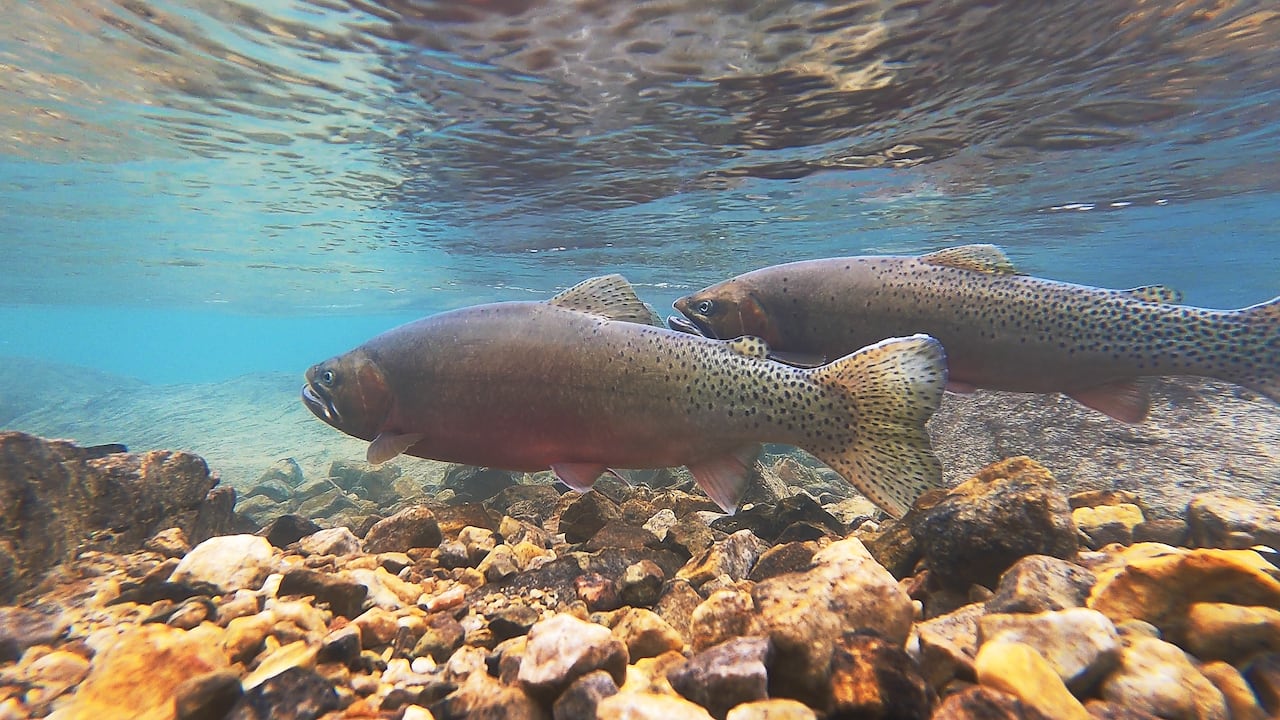
Westslope cutthroat trout swim in Hidden Lake in Banff National Park. This fish species is classified as threatened under the Species at Risk Act, and Parks Canada is actively working to increase its population in various mountain lakes and streams. (Photo submitted by Parks Canada)
‘Not let them go without a fight’
Westslope cutthroat trout previously flourished from the northern region of Banff National Park to the southern edge of Alberta.
However, with the rise of recreational fishing in the 1900s and the introduction of non-native species such as brook trout, their habitat was overtaken. This left westslope cutthroat trout occupying only about 10 percent of their historic waterways.
“We are rectifying a mistake made long ago. This issue originated 50 or even 100 years ago, and we were unaware it would lead to such problems. This situation is highly correctable, and the fish are quite salvageable,” Humphries remarked.
- Parks Canada works to protect threatened westslope cutthroat trout
- Parks Canada reintroducing at-risk species of fish in Banff National Park
The federal agency is undertaking similar initiatives in locations like Helen Lake, Cascade Creek, Katherine Lake, and Corral Creek.
Additionally, plans are underway to initiate similar conservation efforts for the threatened bull trout.
Humphries indicated that this initiative can also benefit other wildlife, including birds of prey and bears, more effectively than brook trout.
A primary objective for Parks Canada is “to protect our species at risk and ensure they do not face extinction without a struggle.”
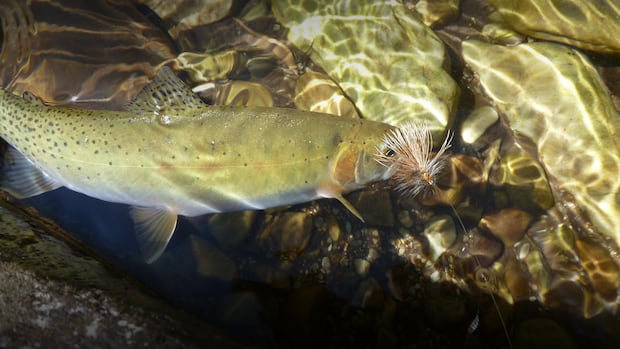
The westslope cutthroat trout thrive in freshwater lakes and creeks, but their numbers have dwindled over the years. CBC’s Greg Colgan joined a Parks Canada team working to restore the species, whose historic range spans from Banff National Park to Calgary.
Tag: rewrite-pending