


Lucas Brehaut, a wildfire research scientist with the Canadian Forest Service, is facing unexpected challenges in his study on forest regeneration post wildfires in Atlantic Canada. Despite the region’s cooler and wetter climate, forest fires are becoming more frequent. In response to a forest fire near Grand Falls-Windsor in 2022, Brehaut initiated a project to investigate forest recovery under changing climate conditions.
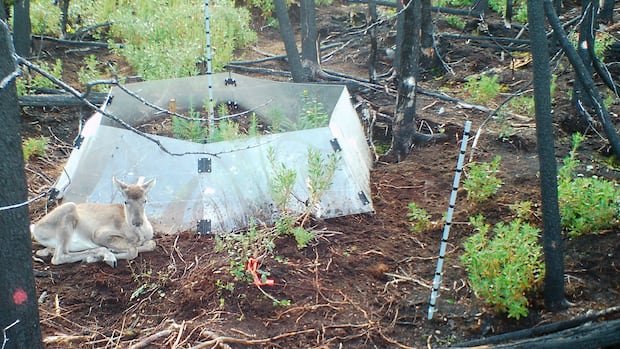
The research involves transporting 19 open-top chambers (OTCs) through the wilderness to monitor seedling growth. These OTCs act like miniature greenhouses, elevating temperatures by one to three degrees to simulate climate warming effects. Currently in its third year of a five-year study, Brehaut and his team faced hurdles such as challenging terrain and harsh weather conditions in Newfoundland.
Unexpectedly, wildlife disruptions became a major concern during the research process. Animals including caribou, moose, black bears, rabbits, coyotes, and owls interfered with the study sites, damaging equipment and even pilfering temperature sensors. Despite encountering setbacks at multiple sites, Brehaut maintains a positive outlook, acknowledging the animals’ natural curiosity and behavior within their habitat.
Kaitlyn Gaynor, an assistant professor at the University of British Columbia, highlighted that animals’ inquisitiveness towards novel objects is a common trait, driven by the potential for new resources or threats. She emphasized that minimizing human scent, swift fieldwork, and camouflaging equipment can reduce wildlife disturbances in research settings.
Animal interference in research extends beyond Canada, with Gaynor recounting encounters with baboons, hyenas, and elephants disrupting fieldwork in Mozambique. Elephants, in particular, pose significant challenges due to their destructive behavior towards vegetation and equipment. Gaynor noted that animal interference remains a major factor contributing to equipment damage in research projects.
In addition to wildlife disruptions, Brehaut also faced challenges from human activities, with snowmobiles accidentally damaging research sites during snowy Newfoundland winters. Despite these obstacles, researchers like Brehaut and Gaynor persevere in their work, adapting to the dynamic interactions between wildlife and scientific endeavors.