

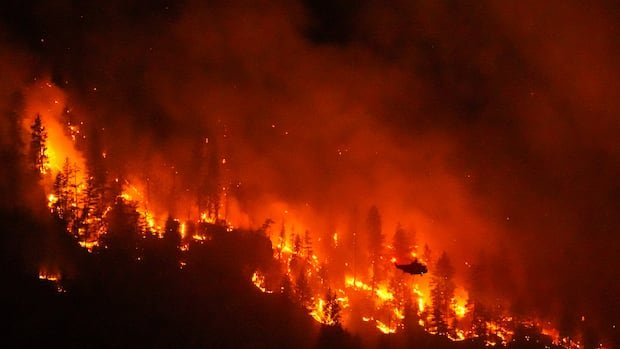

A recent study has revealed that the combination of wildfires, thawing permafrost, and other environmental changes is amplifying the release of greenhouse gases into the atmosphere, accelerating climate change beyond current projections. These climate feedback loops, where climate change triggers increased carbon emissions that further exacerbate the situation, could potentially lead to a 20 to 30 per cent higher warming scenario than previously estimated for this century.
Ben Poulter, program director at Spark Climate Solutions and co-author of the study, emphasized that the existing carbon budget might be significantly smaller than believed if these feedback mechanisms are not taken into account. The findings, published in the journal Environmental Research Letters, shed light on the substantial impact of warming-induced emissions on global temperature rise, underscoring the need for a more comprehensive approach to climate modeling.
Canada, being a significant contributor to warming-induced emissions, stands out in this context. As the country experiences accelerated warming trends, its ecological and social landscapes are poised to undergo profound transformations. The study underscores the interconnected nature of climate impacts, emphasizing that changes in Canada will have far-reaching implications globally.
The thawing of permafrost, a consequence of rising Arctic temperatures, is a critical factor contributing to these feedback loops. The study highlights the shift from gradual permafrost thaw to abrupt thawing processes, triggered by extreme weather events like wildfires and heavy rainfall. This abrupt thawing, occurring in localized areas, leads to the rapid release of carbon previously sequestered in the soil, intensifying methane and carbon dioxide emissions.
In addition to permafrost thaw, wetlands play a crucial role in emitting methane, a potent greenhouse gas. Scientists have observed a significant rise in methane levels attributed to wetland emissions, challenging previous assumptions that human activities alone were responsible for the increase. The study emphasizes the need to incorporate freshwater wetlands into climate models to better understand and mitigate these emissions.
Overall, the study underscores the urgency of addressing these complex feedback loops and their implications for global climate change. It calls for enhanced monitoring and research efforts, particularly in regions like Canada, to effectively tackle the escalating environmental challenges posed by these interconnected processes.