

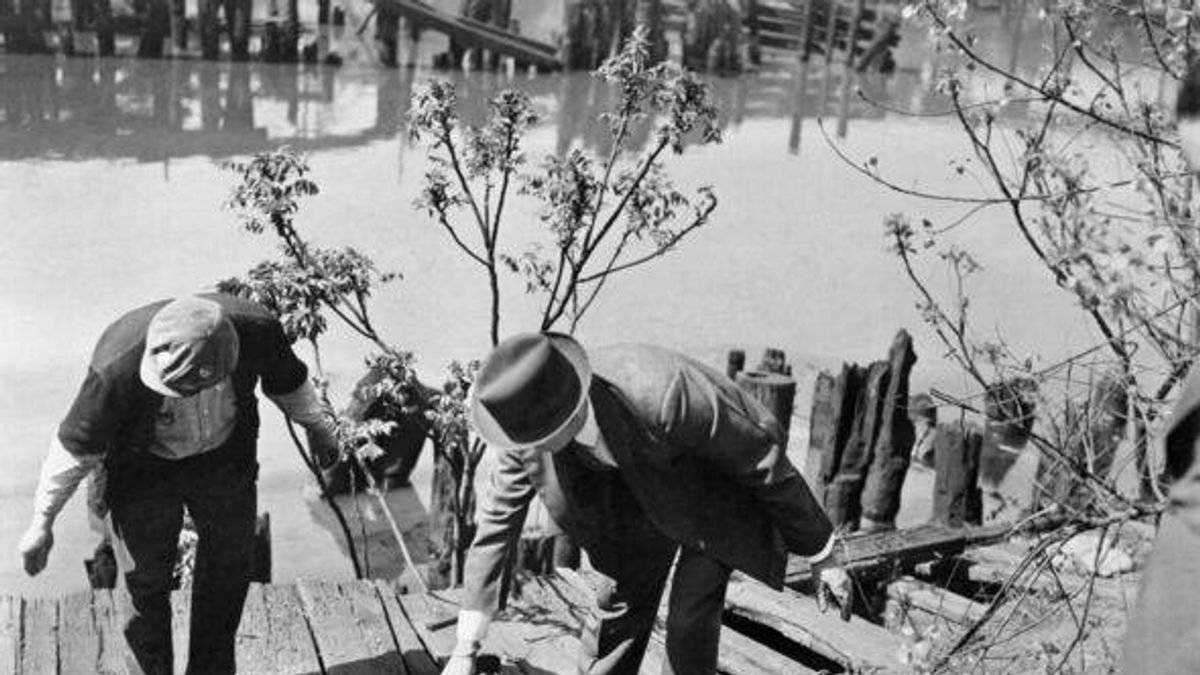

In Cleveland, Ohio, a disturbing unsolved mystery lingers concerning the brutal beheading and dismemberment of more than 12 individuals. The city, once thriving during the 1920s industrial boom, plummeted into hardship with the onset of the Great Depression. By 1934, many residents found themselves unemployed, seeking refuge in the impoverished area of Kingsbury Run, known for its pubs, brothels, and gambling establishments. The discovery of a woman’s body near Lake Erie marked the beginning of the chilling case.
Dubbed Victim #0 or Lady of the Lake, the woman’s preserved skin and missing head sparked fear in the community. A year later, the decapitated body of 28-year-old Edward Andrassy was found by two teenagers, followed by another male victim in the same location. Both men appeared drained of blood, decapitated while alive. The Express US reports that Florence Polillo, a waitress and barmaid, became the fourth victim, wrapped in newspaper and packed into baskets downtown, mirroring the gruesome pattern of discovery.
Most victims were found as torsos, some missing limbs and heads. The Tattooed Man’s death mask was displayed by police at the 1936 Great Lakes Exposition, yet the killer’s identity remained elusive. The precision of the killings suggested a deep understanding of human anatomy, with some decapitations executed in a single swift stroke. By the end of 1936, six more murders were linked to the same perpetrator within a year, causing widespread media attention and public fear.
In a massive investigative effort, authorities interviewed thousands and conducted undercover operations. Two more dismembered bodies were unearthed in 1938, leading to a large raid in Kingsbury Run where numerous men were detained. Despite this, no conclusive evidence was found against any suspects, leaving the case unsolved. Only two individuals have been connected to the murderer, with Frank Dolezal found dead after a questionable confession, and Dr. X, suspected to be Francis E. Sweeney, a troubled surgeon who never admitted guilt but checked into a sanatorium coinciding with the end of the murders, according to the Cleveland Police Museum.