

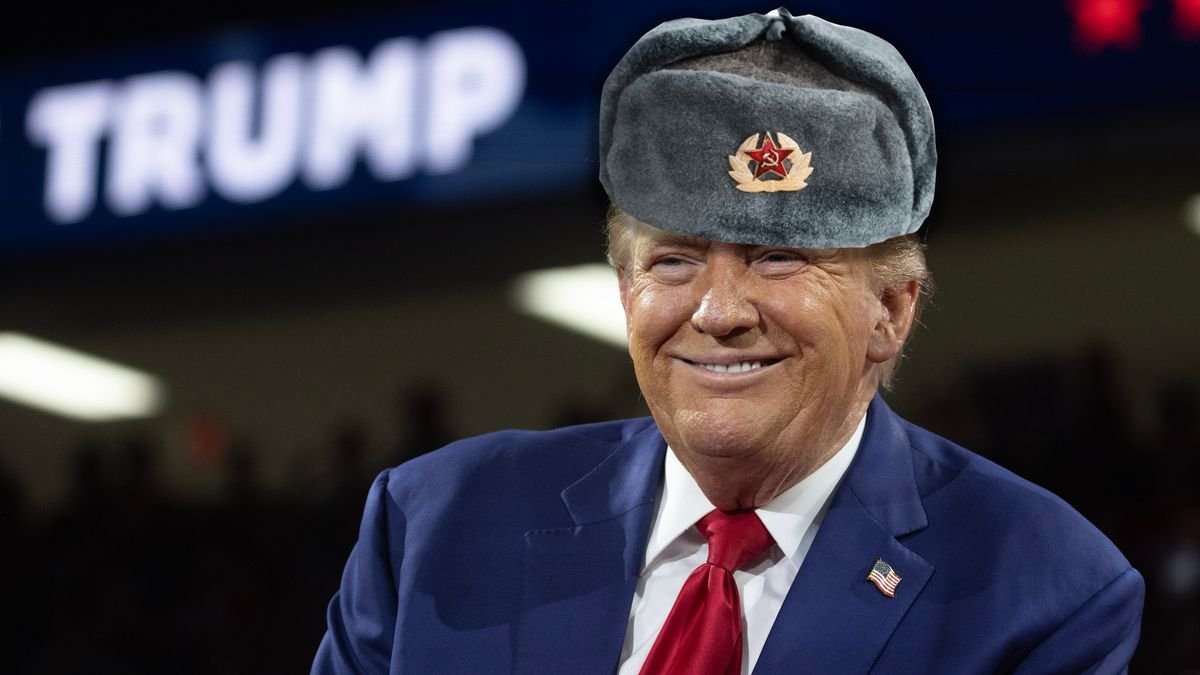

In the realm of international diplomacy blunders, there exists a new low exemplified by the Ukraine “peace plan” proposed by Donald Trump, a proposal heavily skewed in favor of Russian interests, reminiscent of a set of Russian nesting dolls.
Recently leaked transcripts have shed light on the rationale behind this contentious plan: the President of the United States entrusted the handling of one of the most critical global crises to Steve Witkoff, a real estate tycoon whose exposure to international security matters is limited to casual acquaintance with Trump.
Witkoff, lacking any diplomatic or strategic background, would typically be deemed unfit for involvement in foreign policy by any serious administration. Yet, in a bizarre twist, he finds himself advising a top foreign policy aide to Vladimir Putin, transitioning from hotel magnate to geopolitical advisor under the Trump administration.
A read-through of Witkoff’s conversation with Yuri Ushakov reveals a display of excessive flattery and subservience. He counsels Putin’s aide to shower Trump with praise, commend him on the Gaza ceasefire, and treat him as a beacon of peace, insinuating that appeasing Trump’s ego is the key to resolving Europe’s most devastating conflict since World War II.
Engaging in nuclear-era diplomacy with the finesse of a talent agent hardly inspires confidence in crisis management. Remarkably, the White House did not contest the authenticity of the transcript.
Trump justified Witkoff’s conduct as typical negotiation tactics, exposing a lack of seriousness towards Europe’s security. Treating the fate of a continent akin to a business deal for a Trump-owned golf course is not negotiation; it borders on negligence.
Subsequently, revelations emerged of Russian officials openly strategizing on aligning the US plan with Moscow’s demands, pushing for maximum concordance with their agenda. This blatant alignment signifies a shift from subtle influence to overt collaboration under the Trump administration.
Prior to the leak, Witkoff and Trump’s son-in-law, Jared Kushner, met with Putin confidant Kirill Dmitriev to outline a 28-point “peace plan” that strikingly mirrored Kremlin aspirations: Ukraine coerced into territorial concessions, disarmament, and renunciation of NATO ties, masquerading surrender as compromise.
Unsurprisingly, Putin embraced the proposal, affording Russia diplomatic gains it failed to achieve through military means. Trump’s actions do not signify peacemaking but rather a bargain at the expense of Ukrainian sovereignty.
This not only undermines Ukrainians fighting for survival but poses a direct menace to European stability.
A weakened Ukraine, bereft of territories, serves as a green light for Moscow’s expansionist ambitions, potentially extending beyond Ukraine to NATO borders in the Baltics and Poland. Trump’s reliance on amateurs jeopardizes European lives, showcasing a reckless approach to international affairs.
<p class="Paragraph_paragraph-text__PVKlh undefined" data-tmdatatrack="content-unit" data-tmdatatrack-type="