


In the realm of government communication, skepticism often prevails regarding the accuracy of official statements. Over time, this caution has become a standard approach, given the prevalence of strategic messaging and manipulation by those in power. Despite the prevalence of spin tactics, some semblance of truth typically underlies public messages, albeit often molded to suit the agenda of the ruling authorities.
Contrary to this norm, the current administration led by Donald Trump has strayed far from the truth. Recent incidents have showcased blatant falsehoods, such as the misrepresentation of an unarmed woman in Minnesota as a “domestic terrorist” shortly after her shooting. Furthermore, the administration’s deliberate creation of a misleading image depicting a US citizen under arrest for protesting exemplifies a dangerous departure from factual communication. Consequently, a default stance of skepticism toward any communication from the White House has become necessary, prompting a critical eye on the part of the press corps.
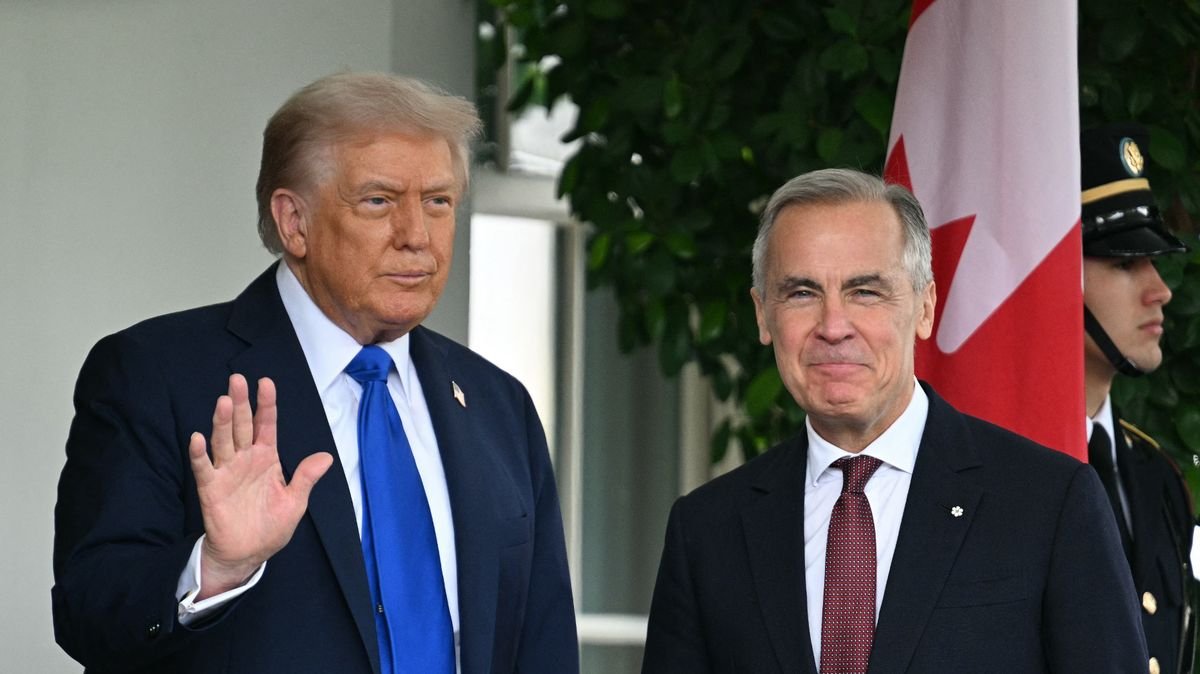
Meanwhile, President Trump has stirred up international trade tensions by threatening Canada with a hefty 100% tariff in response to a potential trade pact with China. The President’s social media post warned the Canadian Prime Minister against facilitating Chinese trade through Canada into the United States, signaling a hardline stance on trade agreements. This development comes amid ongoing trade disputes and negotiations between the two countries, with Trump expressing discontent over recent trade deals.
In a separate incident, Trump’s controversial remarks regarding troops in Afghanistan drew sharp criticism from musician Sir Rod Stewart, who called for apologies from UK political figures Keir Starmer and Nigel Farage. Stewart condemned Trump’s disparaging comments about the troops and urged political leaders to address the issue promptly. This intervention by Stewart added a new dimension to the ongoing discourse surrounding the President’s controversial statements.
Furthermore, the White House faced scrutiny for posting misleading images and misinformation, including a fabricated photo of Trump with a penguin in Greenland, where penguins do not naturally inhabit. This incident, along with other nonsensical social media posts, underscored a pattern of misinformation emanating from official channels. Additionally, the removal of an exhibit on slavery at Philadelphia’s Independence National Historical Park sparked controversy, leading to public outcry and legal actions seeking to preserve historical accuracy and transparency.
In a related development, an FBI agent in Minnesota resigned over concerns regarding the handling of an investigation into a fatal shooting, highlighting internal challenges within law enforcement agencies. The agent’s resignation raised questions about the independence and integrity of investigative processes, shedding light on potential discrepancies in official narratives.
Overall, these incidents reflect a broader trend of misinformation, controversy, and societal tensions surrounding the Trump administration, underscoring the need for critical analysis and fact-checking in today’s political landscape.