


U.S. President Donald Trump has hinted at the possibility of reviving the Keystone XL oil pipeline project, which was previously scrapped by his predecessors, under a new trade agreement with Canada. Some industry experts believe that Trump’s statement is more about political strategy than actual energy interests. Trump made the announcement on social media just before imposing new tariffs on Canadian imports, declaring a “deal” with Canada and delaying the tariffs for three days.
Former TransCanada Corporation executive Dennis McConaghy views Trump’s mention of Keystone XL as a potential bargaining chip for Prime Minister Mark Carney amidst ongoing trade negotiations. Trump has been targeting various sectors of the Canadian economy with tariffs since February 1, 2025, emphasizing that the U.S. can do without Canadian goods. Despite this, certain Canadian exports like oil have been excluded from these tariffs.
However, experts like Carlo Dade caution against premature excitement over the revival of the Keystone XL project, citing political and environmental hurdles that may still pose challenges. Valérie Beaudoin from the Advisory Committee on Canada-U.S. Economic Relations suggests that approving Keystone XL could be more challenging for Trump than for Carney due to potential shifts in U.S. leadership.
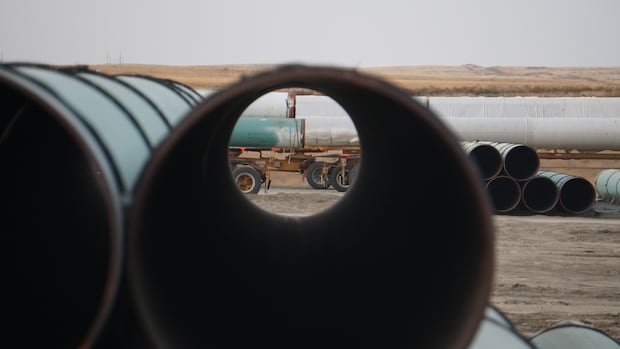
The Keystone Pipeline System, operated by South Bow Corp., plays a significant role in transporting Canadian and U.S. crude oil to American markets. While South Bow has not commented on the recent developments, the company is collaborating with Bridger Pipeline on the Prairie Connector project, utilizing parts of the previously canceled Keystone XL pipeline to potentially boost Canada’s oil exports to the U.S.
Despite Trump’s positive outlook on the project, uncertainties remain regarding its feasibility and future prospects. The project’s fate may also be influenced by political dynamics in both countries. The Prairie Connector initiative, if realized, could significantly enhance Canada’s oil export capabilities, meeting long-term U.S. demand for Canadian crude oil.