

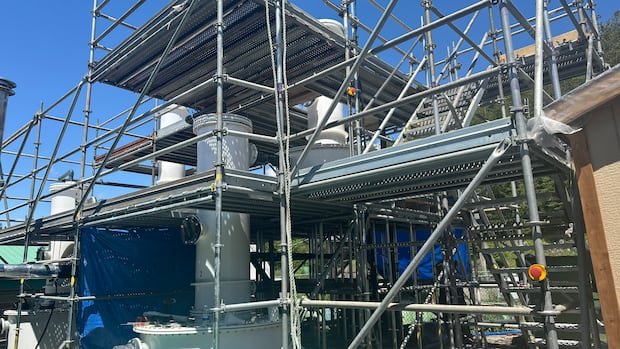

A startup in Nova Scotia is experimenting with a technique to capture and retain more carbon in the ocean, utilizing a new trial facility to validate the idea. The ocean is already a significant reservoir for surplus carbon dioxide, having absorbed around 30% of all human-induced carbon emissions since the 1980s.
The company, pHathom, is striving to draw more emissions out of the atmosphere by trapping carbon dioxide and transforming it into a form suitable for safe storage in the ocean for thousands of years. The initial testing of this method will take place at the Huntsman Marine Science Centre in St. Andrews, N.B.
Kimberly Gilbert, the co-founder and CEO, expressed that demonstrating the safety and effectiveness of the approach through the pilot phase is crucial, particularly in addressing the local concerns associated with global climate change challenges.
By replicating a natural process where raindrops absorb carbon dioxide and become slightly acidic before interacting with alkaline rock like limestone to convert the carbon dioxide into bicarbonate, the company aims to store this bicarbonate in the ocean for extended periods, thereby preventing carbon dioxide from re-entering the atmosphere.
pHathom’s method involves utilizing seawater and exposing it to the emissions from a biomass power plant to increase its acidity. This acidic water is then mixed with small limestone particles in a tank to convert the carbon dioxide to bicarbonate before being reintroduced into the ocean with the same pH level as regular seawater.
In Nova Scotia, other companies are also exploring variations of this carbon removal approach known as alkalinity enhancement. Planetary is conducting a project at Tufts Cove in Halifax, adding alkaline rock to seawater to enhance its pH for increased carbon dioxide absorption. CarbonRun is implementing a similar strategy on rivers within the province.
The pilot project aims to capture 0.1 tonnes of carbon dioxide daily, with the goal of scaling up the technology in the future. Despite the potential benefits, challenges such as energy consumption and scalability remain significant hurdles for carbon removal technologies.
As the world seeks solutions to combat climate change, innovations like those from pHathom offer promising avenues for reducing carbon emissions and transitioning towards a more sustainable future.