

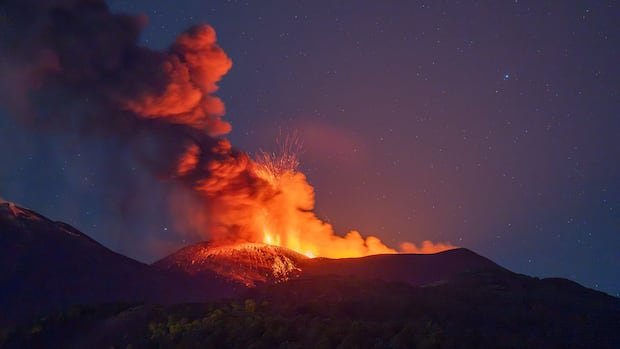

Flights were once again halted at Catania airport in Sicily on Wednesday due to fresh ash emissions from Mount Etna, Europe’s highest and most active volcano. This led to an extension of airspace restrictions, causing disruptions during the peak summer holiday season. The impact of the eruption extended beyond Sicily, affecting neighboring Malta with flight cancellations and significant delays as volcanic ash drifted south over the Mediterranean.
Mount Etna frequently disrupts operations at Catania airport, the main gateway to Sicily and Italy’s fifth busiest airport in terms of passenger traffic. Recent volcanic activities have significantly impacted travelers, with lava flows and smoke seen rising from the crater during the eruptions on July 5 and 6.
Satellite images captured smoke spreading from Mount Etna, illustrating the ongoing volcanic activity. Drone footage showed lava flowing down a slope during a recent eruption. Travel disruptions have plagued eastern Sicily since last week, with ash clouds spreading due to renewed volcanic activity and changing winds, leading to the closure of Catania airport.
While conditions seemed to improve on Wednesday, Malta International Airport continued to caution passengers about potential disruptions. The prolonged restrictions at Catania airport have resulted in added strain on other airports in Sicily. Palermo airport accommodated 190 flights redirected from Catania, while Comiso airport, a smaller facility south of Catania, resumed full operations after briefly suspending flights due to ash from Mount Etna.