

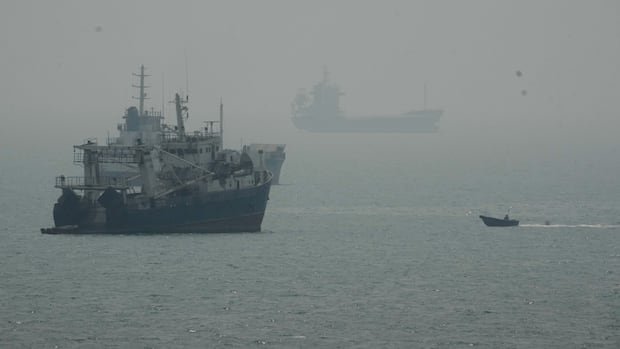

Iran announced on Wednesday that it had carried out attacks on 10 ships near the Strait of Hormuz in retaliation for the sinking of five Iranian oil tankers by the United States. This exchange marked the most significant series of attacks on shipping by both sides since the onset of the six-month-long conflict.
The Islamic Revolutionary Guard Corps (IRGC) of Iran stated that it had responded by launching a ballistic missile strike on a U.S. base near Al Azraq in eastern Jordan. Additionally, Iran reported firing on two U.S. vessels and eight oil tankers attempting to traverse a restricted area in the Strait of Hormuz.
These incidents in the crucial waterway led to a surge in oil prices, with the international Brent crude benchmark exceeding $100 a barrel for the first time since July. The ongoing conflict between Saudi Arabia and the Iran-aligned Houthis, who control most populous regions of Yemen, has further added to market uncertainties.
The Houthis recently carried out attacks on four cities in Saudi Arabia, resulting in significant fires at oil installations. The Saudi authorities confirmed 73 injuries as a consequence of these attacks.
The rise in fuel prices has directly impacted American consumers, particularly as gas prices have soared, averaging $4.15 per gallon for regular gasoline and $5.90 per gallon for diesel. This increase has put pressure on U.S. citizens, especially with the upcoming November midterm elections that could potentially shift the balance of power in the Senate and House of Representatives.
The conflict has also affected Canada, with gas prices climbing by 25-40% in various regions since the war began. As a response, the Canadian government has extended the gas tax holiday until the end of January to alleviate the economic strain on its citizens.
Furthermore, Iran disclosed the establishment of a maritime restricted area extending from Chabahar in Iran into parts of the Gulf of Oman and the Arabian Sea. This move follows Iran’s threats against oil tankers in Kuwaiti and Bahraini ports, indicating the escalating tensions in the region.
As the conflict continues, both sides have engaged in military actions, with Iran targeting U.S. ships and bases while the U.S. military has retaliated by conducting strikes on Iranian assets. The situation remains complex, with global oil supply chains facing disruptions and heightened security risks in the Gulf region.