

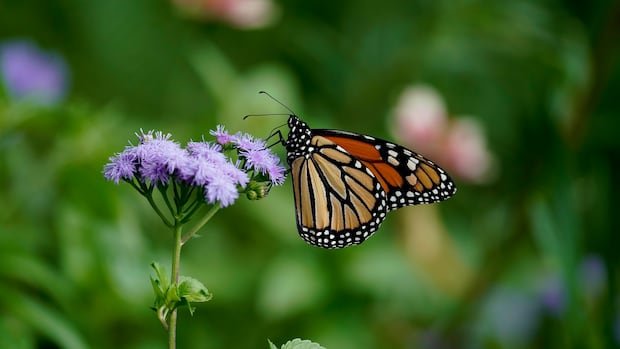

MaryAnn Lepp is amazed by the number of monarch butterflies undergoing their transformation in her garden, observing 20 caterpillars feeding on her swamp milkweed in just one day. She is part of a large group of Canadian monarch enthusiasts who have noticed a surge in backyard milkweed patches thriving due to the wet and hot conditions in parts of the Prairies this summer.
Expressing her excitement, Lepp points out a chrysalis in her garden in La Broquerie, located around 60 kilometers southeast of Winnipeg. She mentions the increased presence of butterflies this year compared to previous years.
While experts cannot definitively attribute the surge to favorable weather conditions, they acknowledge the growing number of anecdotal reports of caterpillars, chrysalises, and monarch butterflies as a positive sign for the federally endangered species. Marika Olynyk, curator of the Living Prairie Museum, notes the abundant presence of monarchs in Winnipeg throughout the summer.
The preservation of native plants, including various milkweed species, at the tall grass prairie in Winnipeg attracts pollinators like monarch butterflies. Although monarchs primarily feed on nectar from milkweed flowers, they also consume other flowering plants like the meadow blazing star. However, monarch caterpillars exclusively feed on milkweed leaves.
Despite efforts by individuals like Lepp to plant milkweed and native wildflowers, these plants are not as abundant as they once were due to the conversion of native grasslands to farmland. Habitat loss remains the biggest threat to monarch butterflies, with the disappearance of tallgrass prairies across North America.
Monarchs were listed as endangered by the Committee on the Status of Endangered Wildlife in Canada in 2016, prompting the federal government to enforce protection measures in 2023. The population of monarch butterflies is monitored by tracking their presence in the forest wintering grounds in Mexico. Olynyk emphasizes the importance of continued efforts to protect and conserve monarch populations.
In addition to monarchs, the native prairie garden at the Assiniboine Park Zoo has seen an increase in numbers of the critically endangered Poweshiek skipperling butterfly. The zoo is actively involved in breeding and releasing Poweshiek skipperlings to support their population recovery.
Enthusiasts like Lepp are dedicated to safeguarding caterpillars and chrysalises under their care, emphasizing the importance of environmental conservation and coexistence with nature. Zoo staff will be assisting monarchs this fall by using radio transmitters to track their migration to Mexico, contributing to ongoing conservation efforts.
Overall, the surge in monarch butterfly populations and the conservation efforts being undertaken signal positive strides in protecting these endangered species and their habitats.