

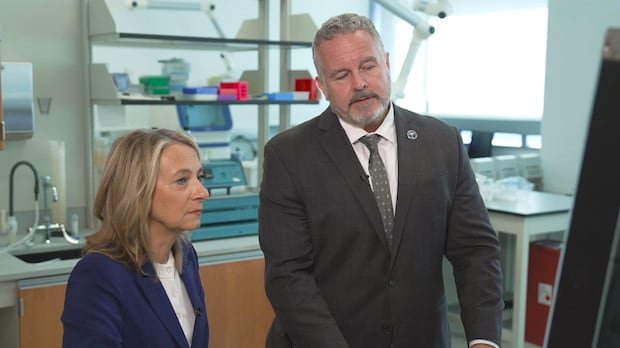

In a Manhattan laboratory, forensic experts in white lab attire are diligently continuing their pledge made a quarter-century ago. They are currently extracting DNA from numerous human remains recovered after the World Trade Center attacks, aiming to match them with DNA samples from personal items provided by victims’ families. The techniques and technologies used to extract DNA and conduct forensic investigations have significantly evolved since 2001.
Mark Desire, the assistant director of forensic biology at the New York City Office of the Chief Medical Examiner, emphasized the emotional impact of identifying and reuniting loved ones with their families after years of scientific advancements. About 40% of the 2,753 individuals who perished at Ground Zero remain unidentified, including around 10 of the 24 Canadian victims.
Recently, the lab achieved its first identification of previously unknown remains using an innovative method that combines DNA testing with genetic genealogy. This breakthrough technique holds promise for future identifications and has been described as a new frontier in forensic science by Dr. Jason Graham, New York’s Chief Medical Examiner.
The preservation and identification of remains from the 9/11 attacks pose significant challenges due to the destructive forces present at Ground Zero. Desire, who was a novice scientist at the New York crime lab during the attacks, recalls the intense experiences and the commitment to fulfilling the promise of identifying all victims.
Despite the complexities and difficulties, the lab’s ongoing efforts and the adoption of advanced forensic techniques offer renewed hope to families still seeking closure. The process involves sending DNA from unidentified remains to an external lab for complete genomic sequencing, followed by genealogical searches conducted by the New York Police Department.
While progress has been made in identifying remains, there are numerous sets of remains with full DNA profiles that do not match any reference samples provided by families. The chief medical examiner’s office encourages families to provide DNA samples to facilitate more identifications.
The emotional toll on families awaiting closure is profound, with some choosing not to know if a match is made for their loved ones’ remains. Each family copes with grief differently, finding their unique ways to honor and remember the victims of the tragic events.