

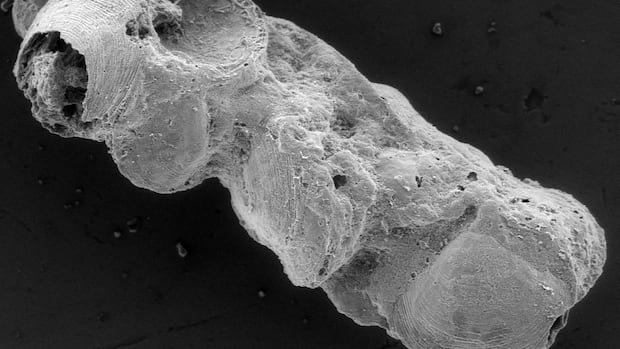

Long before dinosaurs walked the Earth, a surge in biodiversity led to the rise of early ancestors to modern animals — and an uptick in fecal matter. A recent study sheds light on how the examination of coprolites, or fossilized feces, aids in comprehending Earth’s ancient ecosystems, nutrient cycles, and current animal interactions.
The research, detailed in the journal Trends in Evolution & Ecology, delved into the analysis of fecal fossils dating back to the Cambrian period, approximately 540 million years ago. By studying fecal remains from primitive worms, invertebrates, and mollusk-like creatures, scientists discovered that feces likely played a crucial role in enhancing deep-water ecosystems’ habitability and nutrient availability during that era, long before the age of dinosaurs.
The abundance of fecal matter during the Cambrian period, as revealed by the study, holds significance in unraveling the origins of today’s marine ecosystems. Julien Kimmig, a co-author of the study and head of the paleontology division at the Karlsruhe Natural History Museum in Germany, emphasized the importance of recognizing the impact of fecal matter on both past and present ecosystems.
The study, conducted by Kimmig and Russell Bicknell, examined hundreds of coprolites from various deposits worldwide, offering insights into the dietary habits of ancient burrowing worms, arthropods, brachiopods, and hyoliths. The evolution of coprolites in size, from microscopic forms to those resembling rabbit droppings, provides valuable clues about the ecological dynamics of the Cambrian period.
Not only do coprolites offer hints about evolutionary relationships and predator-prey interactions, but they also shed light on Earth’s ecological history. By studying coprolites, researchers aim to decipher how past ecosystems coped with environmental changes and how these insights can inform predictions about the future of ecosystems.
In the realm of paleontology, the study of fecal fossils during the Cambrian period adds a new dimension to understanding one of Earth’s most intriguing epochs. Preceding the Cambrian Explosion, the Ediacaran period introduced enigmatic fossils that challenge conventional categorization within modern animal groups. The Cambrian Radiation marks a pivotal moment in Earth’s history, heralding an explosion of diversity that laid the foundation for modern marine life forms.
The research underscores the surge in fecal deposition during the Cambrian Radiation compared to the preceding Ediacaran period. Beyond predator-prey dynamics, the study explores waste management, nutrient cycles, and their cascading effects on biological diversity, providing crucial insights into the evolution of ecosystems and their relevance to present and future environmental scenarios.
For paleontologists like Karen Chin, coprolites have become indispensable tools for unraveling ancient ecosystems. While fossils of organisms reveal their biology, coprolites offer unique perspectives on interactions within prehistoric food webs. These fossilized feces not only illuminate dietary preferences but also provide clues about nutrient cycling and ecosystem dynamics in bygone eras.
Chin’s work on Mesozoic coprolites showcases the intricate ecological relationships among ancient organisms, shedding light on dietary preferences and the interconnectedness of prehistoric life forms. By delving into coprolites, researchers can uncover unexpected revelations about ancient ecosystems, offering a glimpse into the mysteries of the prehistoric world.
Julien Kimmig’s early encounters with coprolites sparked a keen interest in these often-overlooked fossils, driving his research endeavors to unveil the untold stories preserved within fossilized feces. Encouraging a deeper understanding and appreciation for coprolites, researchers aim to unearth further insights into Earth’s ancient ecosystems and their relevance to contemporary ecological studies.