

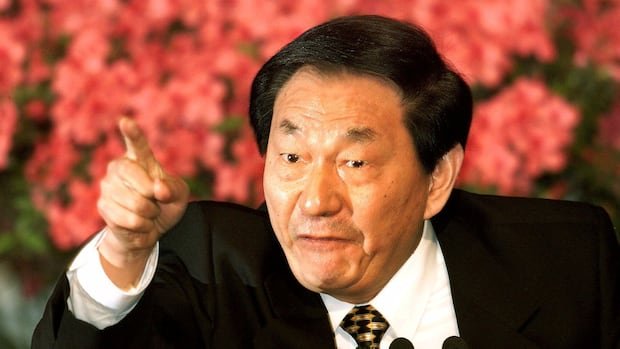

Former Chinese premier Zhu Rongji has passed away at the age of 97, as reported by state media. According to the official Xinhua news agency, Zhu died in Beijing due to illness around 11 a.m. on Wednesday. Known for his impatience and sharp-tongued approach, Zhu played a significant role in China’s economic transformation by implementing drastic changes in the state industry during the 1990s and guiding the country into the World Trade Organization.
Despite facing challenges earlier in his career, including being sent to rural areas for endorsing reforms in other communist nations, Zhu spearheaded a series of reforms during his tenure as premier from 1998 to 2003. He faced opposition from conservative elements within the Communist Party and state-owned enterprises as he pushed for efficiency and profitability in state-owned companies, resulting in millions of job cuts but ultimately propelling China to become the world’s second-largest economy after the United States in 2010.
Building on Deng Xiaoping’s reforms in 1979, Zhu was instrumental in monumental changes such as China’s accession to the WTO, paving the way for China to become a global export powerhouse. These reforms contributed to sustaining economic growth above eight percent annually from 2000 to 2010, reaching a peak of 14.2 percent in 2007.
Notably, Zhu, who was known for his demanding leadership style, earned nicknames like “Boss” and “Madman Zhu” for his willingness to take responsibility for government shortcomings. He was the third-ranking official in the party hierarchy, behind President Jiang Zemin and Li Peng, the chairman of the National People’s Congress.
Zhu’s legacy includes kickstarting China’s housing boom in 1998 by initiating the sale of apartments owned by state enterprises, leading to a surge in private homeownership in urban areas. Despite his push for market-oriented reforms, Zhu maintained a stance against full privatization of the economy, advocating for retaining government ownership in key sectors like banks, airlines, and oil companies.
Born in Mao Zedong’s home province of Hunan, Zhu’s career saw a resurgence after years of political exile during the Cultural Revolution. He rose swiftly through the ranks, serving as deputy Shanghai party secretary and mayor before assuming higher positions within the party leadership.
Throughout his tenure, Zhu demonstrated a willingness to admit and rectify official mistakes, earning praise for his transparency and accountability. His ability to diffuse tense situations with tact and his commitment to economic reforms have left a lasting impact on China’s development trajectory.