

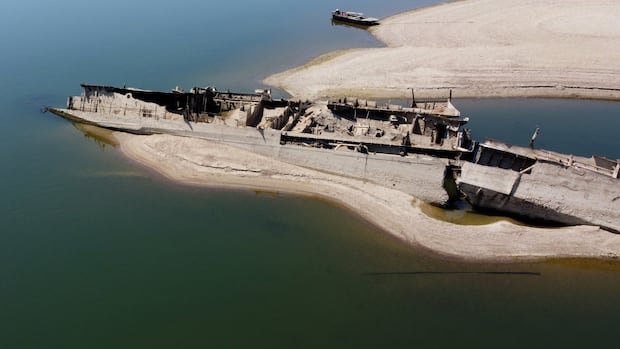

In the midst of the scorching heat and drought that has enveloped Europe this summer, sunken Nazi German warships from World War II are resurfacing in the Danube River due to plummeting water levels. This resurgence of historical relics is a stark reminder of the severe weather conditions gripping the continent.
Western Europe is bracing for another heat wave, marking the fifth since May, with temperatures nearing 40 degrees Celsius in Spain, France, and Italy. The Copernicus climate monitoring service confirmed that June and July witnessed the highest temperatures on record in western Europe, leading to an estimated 25,000 heat-related deaths.
The ongoing sweltering conditions have not only fueled devastating wildfires but have also exposed long-submerged artifacts like a German military motorcycle in Hungary, an unexploded British bomb in Slovakia, and ancient mammoth remains in Bulgaria as the Danube’s water levels hit record lows.
Climate scientists warn that these events are symptomatic of a larger issue: the escalating impact of fossil fuel-driven climate change, intensifying heatwaves, droughts, and wildfires across Europe. According to Richard Allan, a climate scientist, the current situation is just a glimpse of the broader consequences of global warming if greenhouse gas emissions continue unchecked.
The drying Danube River has unveiled a piece of history, with historians estimating that up to 200 Nazi warships were scuttled near the Serbian city of Prahovo in 1944. The exposed wrecks serve as a poignant reminder of the past as they resurface due to receding water levels.
Countries along the Danube, Europe’s second-longest river, are facing immediate challenges due to the low water levels. Romania has imposed water restrictions for crop irrigation and taken measures to ensure the operation of its sole nuclear power plant. In Hungary, power conservation efforts were initiated as the low river flow posed a risk to nuclear reactors.
The extreme weather conditions are a clear indication of climate change, with recent temperatures significantly surpassing historical averages. Climate experts emphasize that the current heat extremes and droughts are interlinked, creating a vicious cycle that exacerbates environmental challenges.
Looking ahead, experts warn that the impact of climate change could worsen, especially with the possibility of a super El Niño event. This could lead to unprecedented global temperatures in the coming years, compounding the effects of ongoing greenhouse gas emissions.
As Europe navigates through this period of environmental turmoil, the need for sustainable resource management and climate action has never been more apparent. The current events unfolding along the Danube River serve as a stark reminder of the urgent need to address climate change and its far-reaching consequences.