

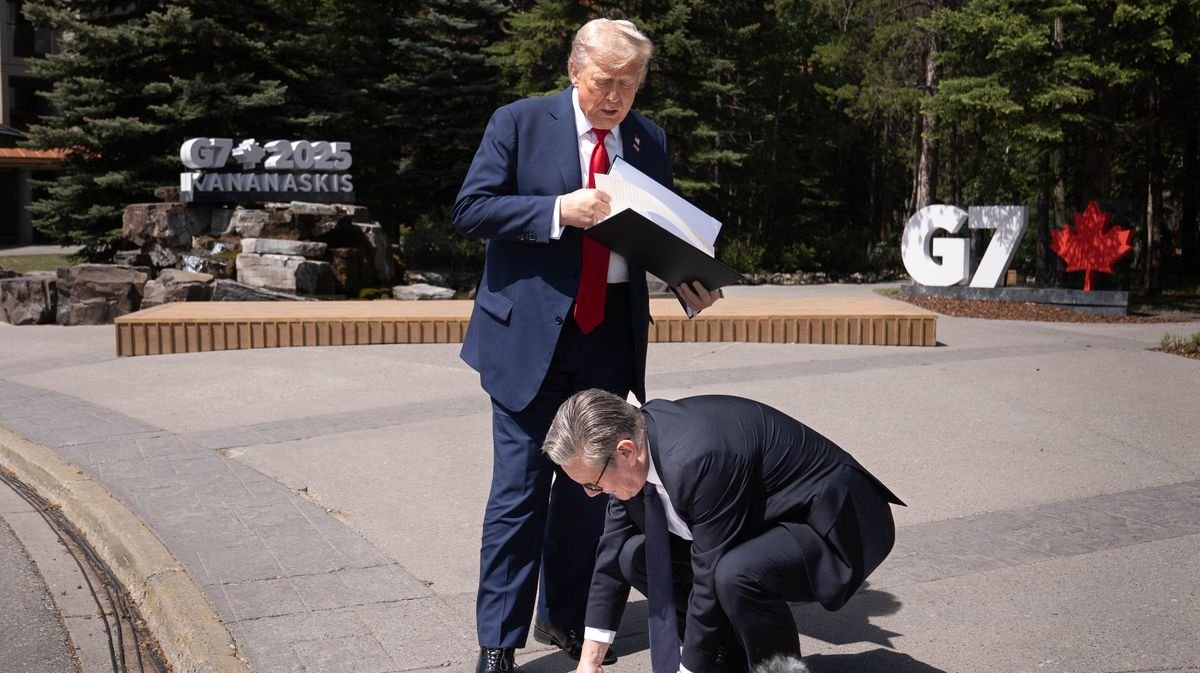

In an unexpected turn of events during his second term, Donald Trump’s surprising affinity for Keir Starmer has caught the attention of many observers. Starmer has revealed that they share a strong rapport, bonding over common “family values.” Across Europe, Starmer is perceived as a key intermediary for other leaders seeking to engage with Trump.
Recently, Starmer played a pivotal role in diffusing tensions between Trump and Nato regarding Greenland. Acting as a messenger for Nato’s Mark Rutte and Danish Prime Minister Mette Frederiksen, Starmer conveyed messages following his discussions with them. Notably, Volodymyr Zelensky has shown appreciation for Starmer’s influence on Trump’s decision-making process, albeit temporarily.
However, like any relationship, challenges can arise, often overlooked until they escalate. Starmer and Trump’s initial meeting in office was marked by high stakes and tension, later eased by Starmer’s strategic move to offer a second state visit from King Charles. This gesture resonated well with Trump, setting a positive tone for their interactions.
Despite initial successes, such as security guarantees for Ukraine, Trump’s goodwill towards Starmer proved fleeting, as demonstrated by his public criticism of Zelensky shortly after. While Starmer welcomed Trump’s offer resembling a trade deal, issues arose over tariffs and trade negotiations.
The partnership between Starmer and Trump faced setbacks, particularly concerning Russia and Ukraine, with Trump’s shifting alliances causing uncertainty. Notably, Trump’s unilateral actions, such as the invasion of Venezuela without prior consultation, strained their relationship.
In the midst of geopolitical tensions, the Greenland issue emerged as a point of contention between Trump and the international community. Starmer’s role as a mediator appeared challenged, with Trump disregarding diplomatic efforts and threatening punitive measures.
As uncertainties loom, questions arise about the depth and significance of the relationship between Starmer and Trump. Despite diplomatic gestures and engagements, the evolving dynamics between the two leaders raise doubts about the true nature of their alliance.