

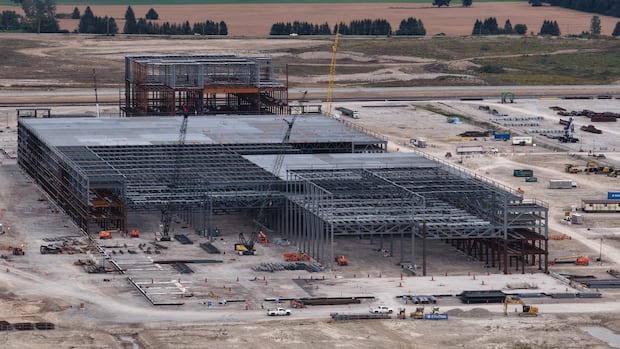

The Volkswagen subsidiary responsible for the construction of an electric vehicle (EV) battery “gigafactory” in St. Thomas, Ontario, has announced that the facility is now anticipated to commence operations in 2029, which is two years later than initially scheduled.
PowerCo Canada disclosed this information in a press release regarding the engagement of Mississauga, Ontario-based EllisDon Corporation as the main contractor for the factory’s construction.
“St. Thomas is now projected to begin operations in 2029, accommodating next-generation battery technology while also maintaining flexibility for future scaling as market conditions change,” stated a news release.
PowerCo did not provide a spokesperson for an interview with CBC News concerning the delay.
Initially set to open in 2027, the $7-billion factory, which includes a commitment of up to $13 billion in subsidies from the federal government, was first revealed in 2023. It was projected to create 3,000 direct jobs along with tens of thousands of indirect jobs in the area.
-
Video
Highway 3 expansion gets underway as St. Thomas prepares for battery plant boom
-
Construction has started on massive Volkswagen battery plant in St. Thomas, Ont.
In anticipation of the factory’s arrival, nearby municipalities and the provincial government have initiated infrastructure upgrades to enhance sewer and road capacities for the expected population surge by 2027.
Prior to the announcement of the plant, the province permitted St. Thomas to annex land from the adjacent municipality of Central Elgin to facilitate the development.
In August 2025, PowerCo Canada revealed it had granted two significant construction contracts for the initiative. Construction commenced in October 2025, beginning with work on the foundations of the facility.
St. Thomas Mayor Joe Preston, who has advocated for the factory as a key contributor to economic growth in his city, expressed to CBC News that he is not concerned about the two-year postponement.
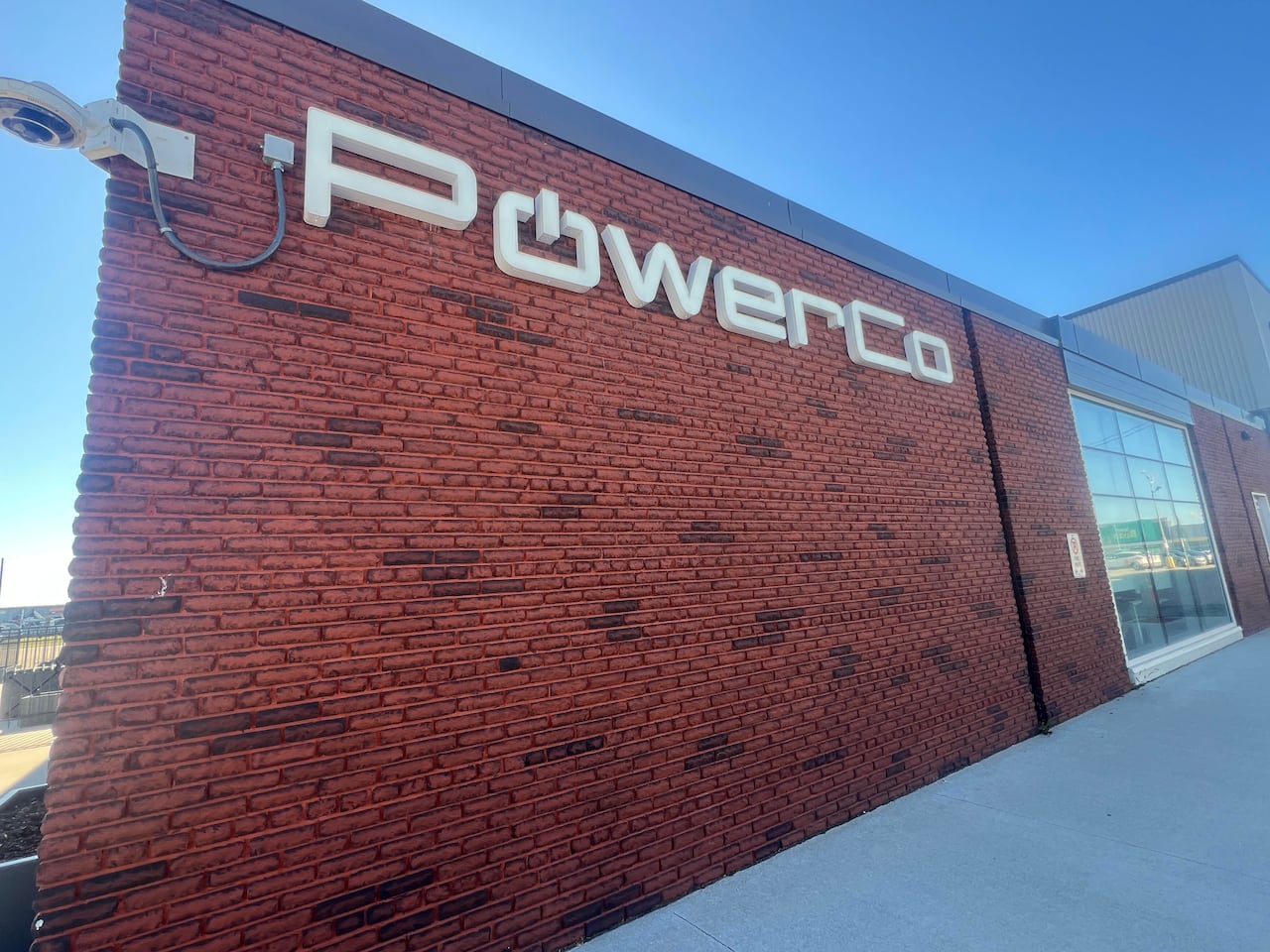
PowerCo has established a temporary office in downtown St. Thomas. (Andrew Lupton/CBC News)
“They’ve chosen an excellent local Canadian general contractor, which necessitated an adjustment in the [opening] date,” noted Preston.
Since August 2025, PowerCo has been recruiting workers in the St. Thomas region. Preston estimates that approximately 500 individuals are currently employed by the company in the vicinity.
He also highlighted “the number of employees already working and residing in the city of St. Thomas, along with the extensive construction occurring at the site daily” as reasons to remain optimistic about the project.
Preston also pointed to Yarmouth Yards, a substantial industrial park created by St. Thomas, which is attracting industries that complement battery production.
Provincial officials have also expressed their support for EllisDon’s appointment as the primary contractor.
A representative from the Ministry of Economic Development, Job Creation and Trade stated in a written response to CBC News that the contract “marks a significant milestone in their efforts to commence production, which will generate thousands of direct and indirect jobs throughout the supply chain.”
The ministry’s statement did not address the two-year postponement.
“We are eager to continue collaborating with PowerCo as they move forward with their $7-billion gigafactory in St. Thomas, positioning Ontario as a leader in innovative battery and automotive production for years to come,” it added.
Local MP expresses concerns
Andrew Lawton, the Conservative MP for Elgin—St. Thomas—London South, described the news of the delay as disappointing and questioned Volkswagen’s dedication to the plant.
“I understand that Volkswagen asserts it’s merely a matter of pace, not about overall commitment. However, ultimately, it is about commitment because we anticipated that progress would be moving forward at a pace we are not witnessing,” Lawton remarked.
Lawton further expressed his desire to know what actions the federal government is taking to expedite matters and ensure Volkswagen’s ongoing commitment.
“We have seen $13 billion in federal subsidies allocated to this, and the expectation was for 3,000 well-paying local jobs, in addition to construction jobs. All of this is currently in jeopardy,” he stated.
Shifts in the EV market influence Ontario’s automotive plans
The market conditions referenced by PowerCo coincide with automakers throughout Ontario who have revised their electric vehicle production strategies in response to shifting EV demand.
In April 2025, General Motors cited lower-than-anticipated demand when it revealed plans to cease production of the Chevrolet BrightDrop electric delivery van at its CAMI Assembly plant in Ingersoll, resulting in hundreds of layoffs.
-
Video
Hundreds of workers laid off at Ingersoll, Ont., assembly plant as GM halts production
-
Honda more definitively halting $15B EV plant development in Ontario, according to reports
Honda also postponed its plans for a $15-billion EV plant in Alliston in 2025 before ultimately scrapping the project, stating it would continue evaluating the EV market.
Meanwhile, Canadian EV sales have displayed signs of growth.
Data released by Statistics Canada in June indicated that the number of new EVs purchased by Canadians had risen by over 20 percent compared to the same period last year.
In January, Canadians bought 8,672 new EVs, followed by 12,547 in February and 21,574 in March, before sales dipped to 17,795 in April.