

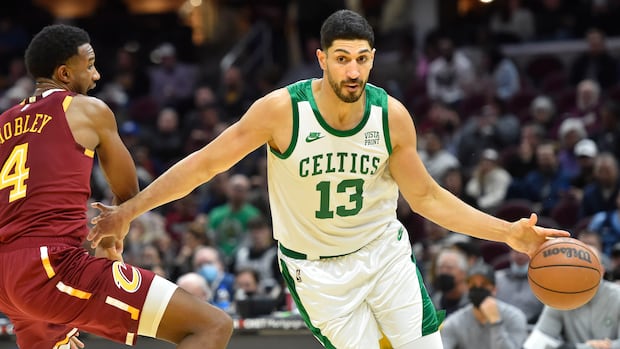

Two ex-NBA players have entered the fray of intense debates surrounding transgender athletes this week, announcing their intentions to participate in the 2027 WNBA draft.
Enes Kanter Freedom and Royce White’s declarations have faced significant backlash, with one sports columnist labeling their actions as “political stunts that mock the league and its female athletes, while also being harmful to a marginalized group.”
The WNBA has been embroiled in controversy lately due to Indiana Fever guard Sophie Cunningham’s recent statements regarding transgender individuals in sports.
Kanter Freedom and White claim their participation depends on WNBA regulations, which permit only women to play but do not explicitly exclude transgender women. Here’s what you should know.
The Women’s National Basketball Association (WNBA) has found itself at the center of a culture war, according to advocates for trans rights, following tense exchanges between supporters of Indiana Fever’s shooting guard Sophie Cunningham and one of the Seattle Storm’s owners. This incident is the most recent in a series of legal decisions, prominent interviews, and statewide ballot measures that could further restrict the participation of trans athletes in sports at educational institutions.
How did this start?
The controversy ignited when Cunningham stated in an interview with ESPN that she aimed “to protect…young girls in sports who should not have to compete against biological men.”
The phrase “biological male” is frequently employed to discredit or undermine trans, non-binary, and gender-diverse individuals.
Cunningham’s comments tapped into a topic actively debated well beyond the WNBA, sparking a media frenzy and protests both supporting and opposing Cunningham’s stance.
Some members of the Trump administration voiced their approval, including Vice-President JD Vance, who praised her as “courageous” during a discussion with Fox News.
Conversely, several coaches and players within the WNBA—where no transgender player has ever competed and which has historically welcomed a 2SLGTBQ+ audience—advocated for inclusivity in sports for transgender women and girls.
The Women’s National Basketball Player’s Association, the players’ union, denounced “hate, abuse, and demonization” directed at any group, including transgender individuals, in a statement released on Sunday. “We will persist in having difficult discussions. However, we refuse to be utilized as political tools.”
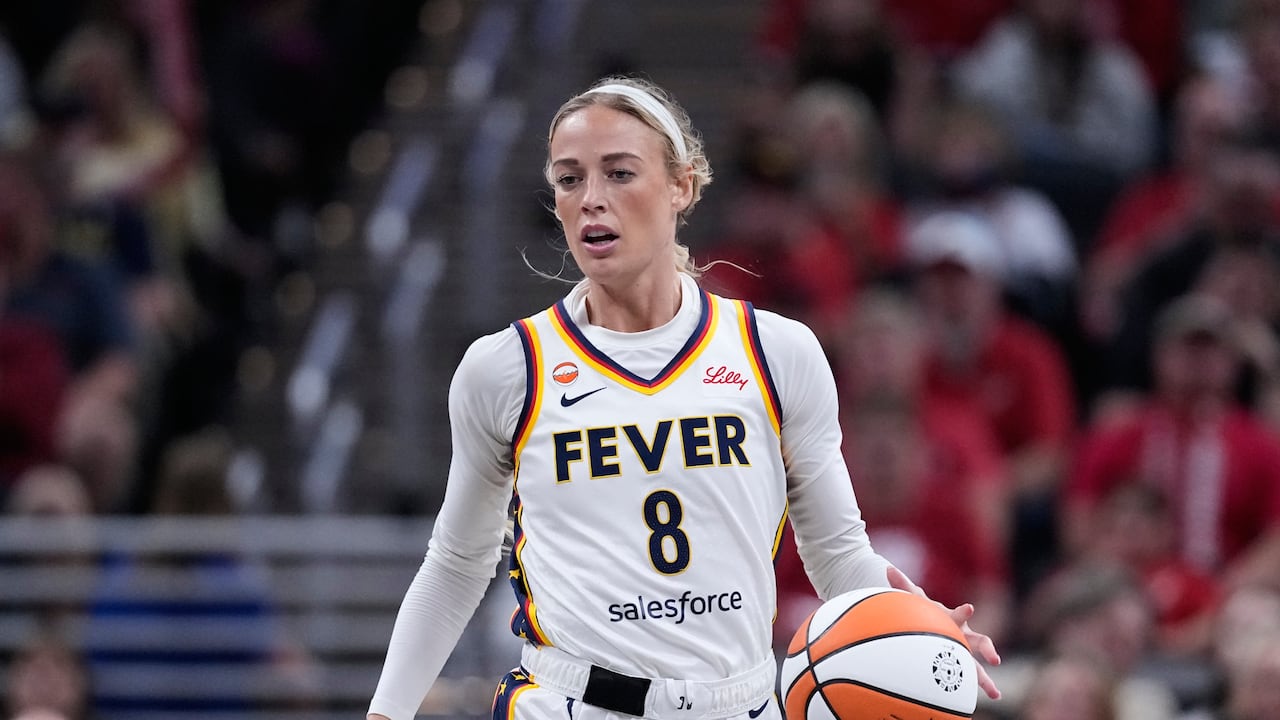
Cunningham expressed to ESPN her desire to ‘protect … young girls in sports who shouldn’t have to compete against biological men.’ (Michael Conroy/The Associated Press)
What have White and Kanter Freedom said?
Kanter Freedom, who stepped away from the NBA in 2022 after 11 seasons, claimed on Instagram that he meets “every single requirement” to participate in the WNBA, asserting that “simply declaring who you are is all that’s needed.”
He stated he does not intend to “mock, belittle, or disrespect any community or personal choices.”
White—who recorded no points in his three appearances in the NBA—told Fox News that he “occasionally [identifies] as a woman for basketball purposes.”
-
Indiana Fever coach Stephanie White says divisiveness ‘will not win’ during pregame rant
-
Debate over trans athletes overtakes WNBA
He mentioned he would qualify for the WNBA due to his “naturally fair skin” and “thick eyelashes.” He also indicated he was “exploring” the idea of wigs. Until recently, White was pursuing a Republican Senate nomination in Minnesota.
Daniel Sailofsky, an assistant professor of sport management at York University in Toronto, noted that it is “not a coincidence” that the WNBA—predominantly featuring Black and queer women, and known for being “overtly political” and enjoying increasing success—is being targeted.
According to Sailofsky, the actions of Kanter Freedom and White represent “an effort to gain traction” within a right-wing movement aiming to “exclude trans individuals from public life,” accusing them of being “disingenuous” and acting in “bad faith.”
“None of those making these claims have ever genuinely cared about women’s sports,” Sailofsky remarked to CBC News.

Kanter Freedom, left, is seen with Argentina’s President Javier Milei at the America First Policy Institute at Mar-A-Lago in Florida in 2024. (Carlos Barria/Reuters)
What are the league’s rules and what has it said?
The eligibility criteria for the WNBA are specified in the league’s collective bargaining agreement, which states that “only players who are women” are permitted and does not explicitly prohibit transgender women.
A WNBA representative informed CBC News that the league convened a meeting on Wednesday to discuss “ongoing conversations regarding transgender athletes and the persistent hate and vitriol directed at players online.”
While the announcement did not specifically mention Kanter Freedom and White, it asserted: “There are no immediate eligibility concerns affecting the WNBA, and we strongly condemn the bad-faith efforts to exploit these topics to belittle or marginalize others.”
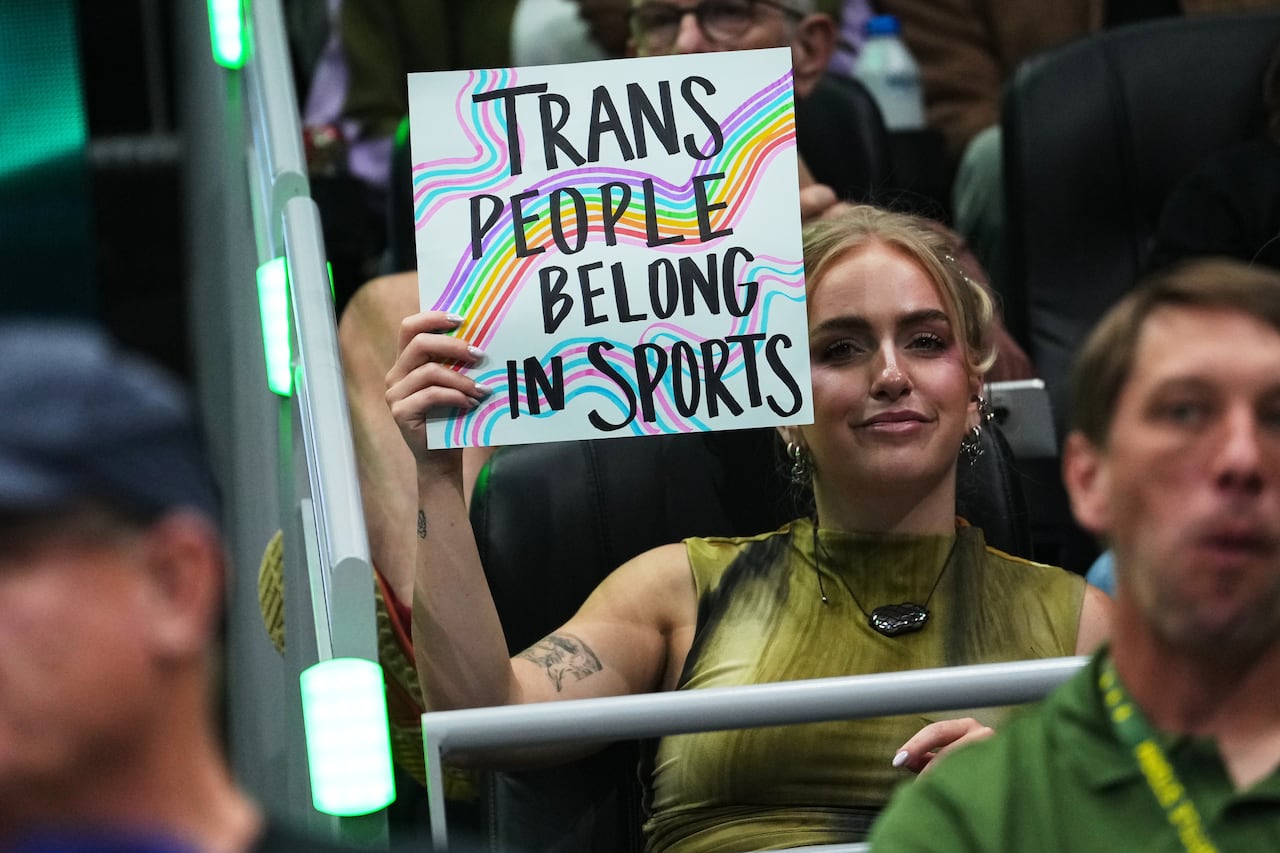
During a WNBA game between the Seattle Storm and the Indiana Fever on July 28 in Seattle, a person displayed a sign reading ‘trans people belong in sports.’ (Lindsey Wasson/The Associated Press)
What’s the wider context?
In recent years, right-wing politicians and activists have increasingly harnessed women’s sports to promote anti-trans narratives, resulting in “very real consequences,” according to Charles Macaulay, an assistant professor at the University of Guelph who examines the intersection of social issues and sports.
“This discourse is beginning to influence government policies and is being integrated into the policy frameworks of sports organizations,” Macaulay stated.
Last year, U.S. President Trump issued an executive order that withheld federal funding from schools permitting transgender women and girls to participate on those teams. The next day, the NCAA—which oversees U.S. collegiate athletics—prohibited trans athletes from competing on women’s teams.
In Canada, Alberta recently enacted legislation prohibiting transgender girls from competing in amateur female sports. Furthermore, the International Olympic Committee has effectively restricted transgender women from participating in women’s events.
These regulations can result in youth being excluded from sports, according to Macaulay, who emphasizes that the crucial question is, “How can we foster an environment that is inclusive and safe for everyone?”
“It’s essential to keep this in mind as we navigate this complex and nuanced subject, particularly concerning a very small and significantly marginalized population.”