

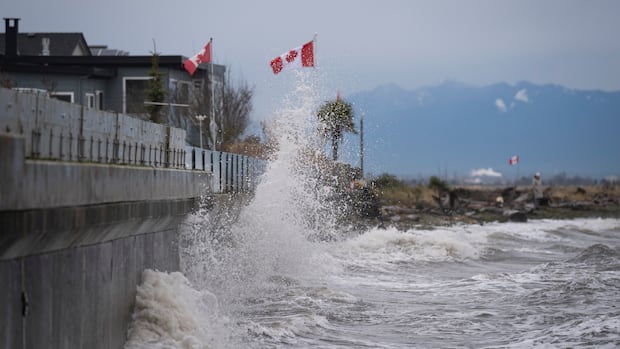

Authorities on the Canadian and U.S. West Coast are alerting coastal residents about possible flooding, primarily due to an event known as a king tide.
This unique occurrence results from the alignment of the Earth, moon, and sun, producing significant tides that can reach heights of approximately 0.3 to 0.6 meters above the typical high tide level.
The ongoing king tide is projected to conclude on Thursday, but until that time, officials are cautioning coastal inhabitants about the risk of flooding, particularly as these elevated tides align with rising sea levels attributed to El Niño.
Oceanographer Gregory Crawford describes this situation as a “worst-case scenario.”
“Definitely, areas that are low-lying without substantial sea wall defenses are likely to experience more severe flooding than usual,” stated Crawford, who serves as an adjunct professor at Ontario Tech University in Oshawa, Ontario.
The Weather Network reports that the peak tide is anticipated on Wednesday morning, coinciding with the full moon.
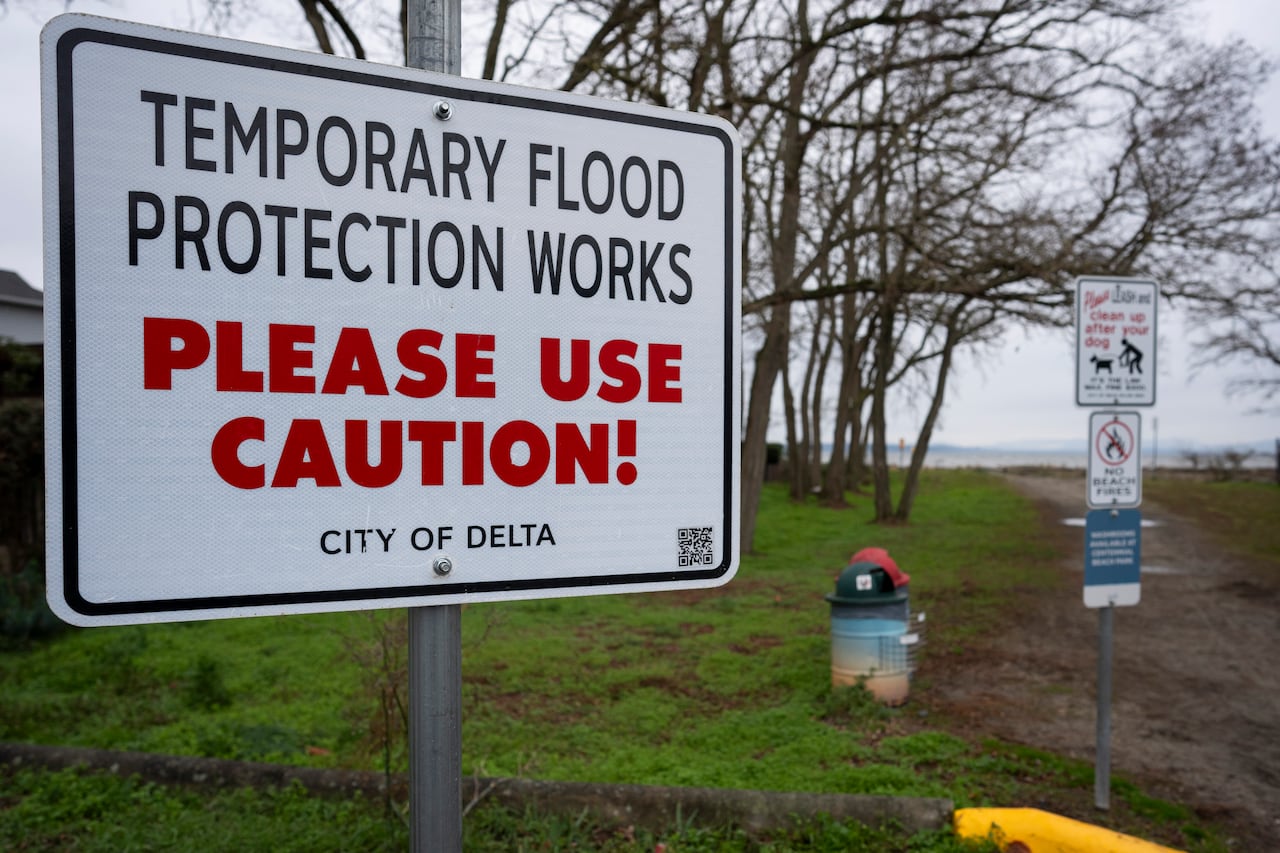
A flood warning sign is displayed at Boundary Bay in Delta, B.C., on Tuesday. The current king tide is set to conclude on Thursday. (Hunter Soo/CBC)
What causes a king tide?
Several types of alignments can lead to higher-than-usual tides.
Tides result from the gravitational effects of the moon and sun on the oceans. As these celestial bodies shift positions, the tides change accordingly.
Spring tides occur every two weeks when the moon, sun, and Earth align, resulting in tides about 20 percent higher than average.
Additionally, tide levels rise when the moon is at perigee, meaning it is closest to Earth in its orbit.
When both alignments occur simultaneously, the result is the king tide, which typically peaks in late fall and early winter when the Earth is nearest to the Sun, lasting several days.
“Basically, the gravitational forces of the moon and the sun align to maximize the tidal range, which we refer to as the king tide,” explained Crawford.
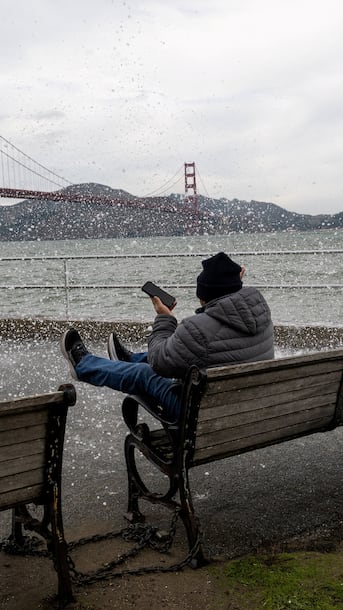
King tides impact the Pacific coast annually, but this week they may break long-standing records in California due to storm systems and El Niño.
Tides are predictable, storms are not
Crawford mentions that king tides are quite predictable due to their astronomical nature, with the most extreme conditions lasting only a few days, allowing those near the coast to prepare accordingly.
While king tides themselves are not particularly hazardous, it is crucial to be vigilant about other factors affecting the ocean.
“When El Niño, king tides, and weather conditions, or tsunamis, coincide, it can lead to a much more serious situation,” warned Crawford.

A bus navigates through floodwaters during high tides on Tuesday in Sausalito, California. (Heather Diehl/The Associated Press)
Crawford notes that king tides usually do not concern those living further inland, but individuals who spend time near the coast are likely aware of these significant tides.
“If you’re located on a hill, you probably aren’t too worried,” Crawford added.
Crawford indicates that king tides typically occur around two to four times each year.
The Weather Network forecasts additional king tides for B.C. next month, scheduled from December 22 to 26.