

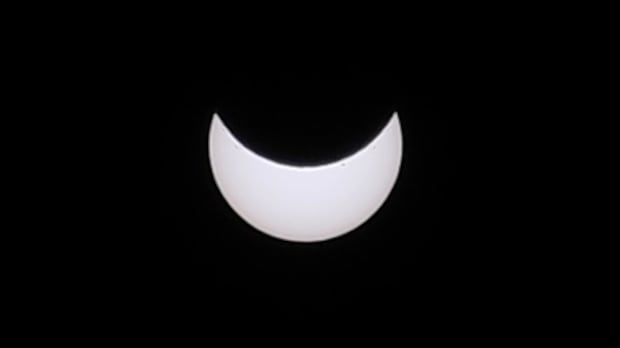

On Wednesday afternoon in Newfoundland and Labrador, observers had the opportunity to witness a partial solar eclipse, conditions permitting.
Churchill Falls was the first location to observe the partial eclipse, which began at 1:37 AT (2:07 NT).
The partial eclipse gradually made its way across the province throughout the afternoon, concluding in St. John’s at 4:37 p.m. NT.
The extent of the eclipse varied by location, with an expectation that about 50 percent of the sun would be obscured by the moon in Newfoundland.
-
Yellowknife man travels to Spain to catch his 23rd solar eclipse
-
Get ready for ‘meteor Christmas’ with an added bonus: a partial solar eclipse
At the Johnson Geo Centre in St. John’s, an enthusiastic crowd gathered to observe the moon slowly move in front of the sun, equipped with special safety glasses.
The viewing event spanned from 12 p.m. NT to 5 p.m., hosted in collaboration with the Royal Astronomical Society of Canada and STEM Girls.
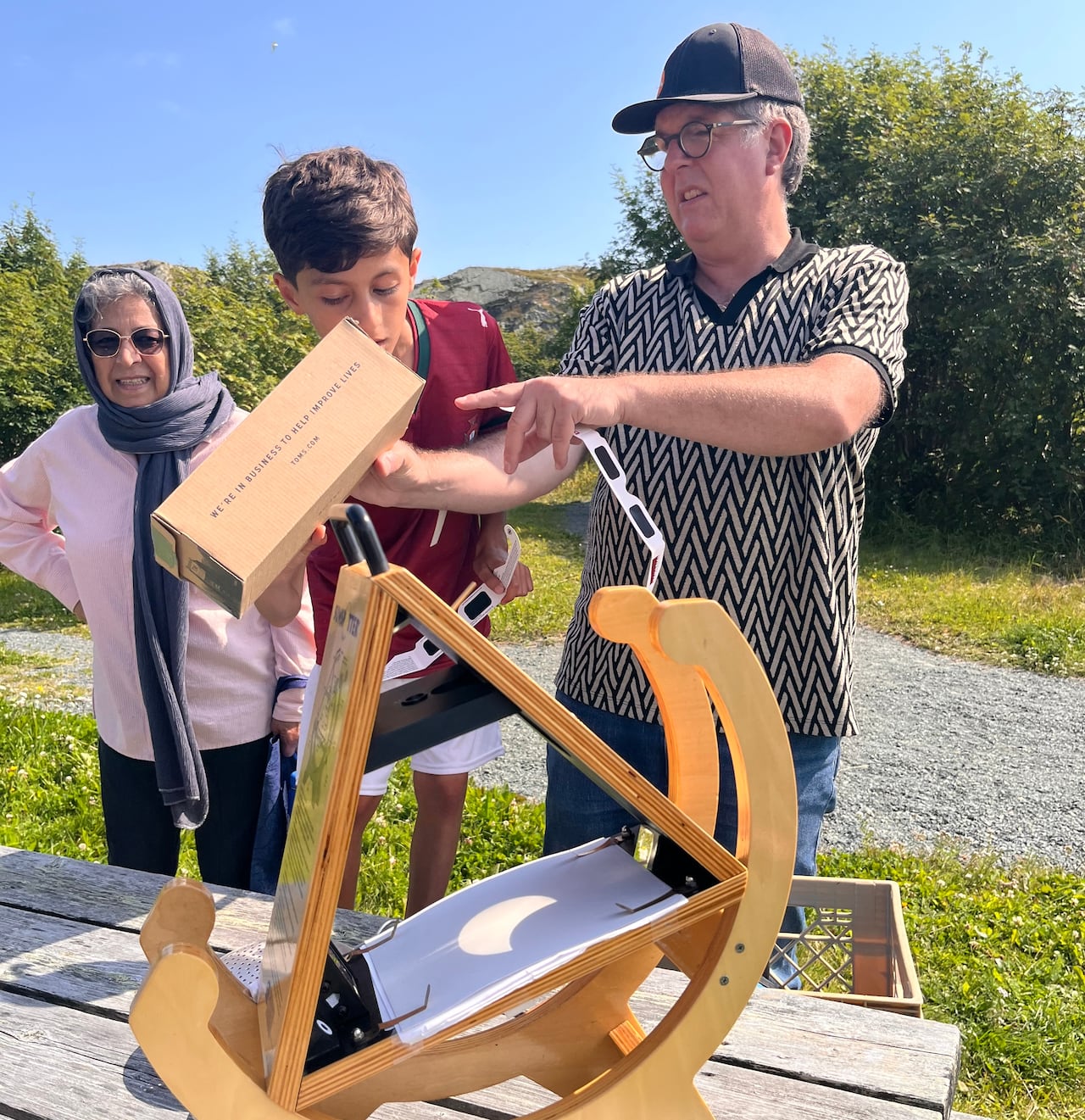
At the Johnson Geo Centre in St. John’s, spectators watched the moon pass over the sun with special equipment in hand. (Peter Cowan/CBC)
Neilson Hiding, an astronomer from Memorial University, shared with CBC that he could observe the moon “eating the sun” through his telescope.
“I think it’s quite marvelous,” Neilson remarked during the gathering.
“We inhabit a vast solar system. While there are few rocky planets, we are unique in having a large moon. Other planets’ moons don’t create solar eclipses like ours do. We have the most impressive eclipses in the solar system,” he explained.
According to Neilson, partial eclipses are uncommon, occurring roughly every 50 years.
“It takes quite some time for eclipses to recur. We may not see another one in Newfoundland for a while,” he added.
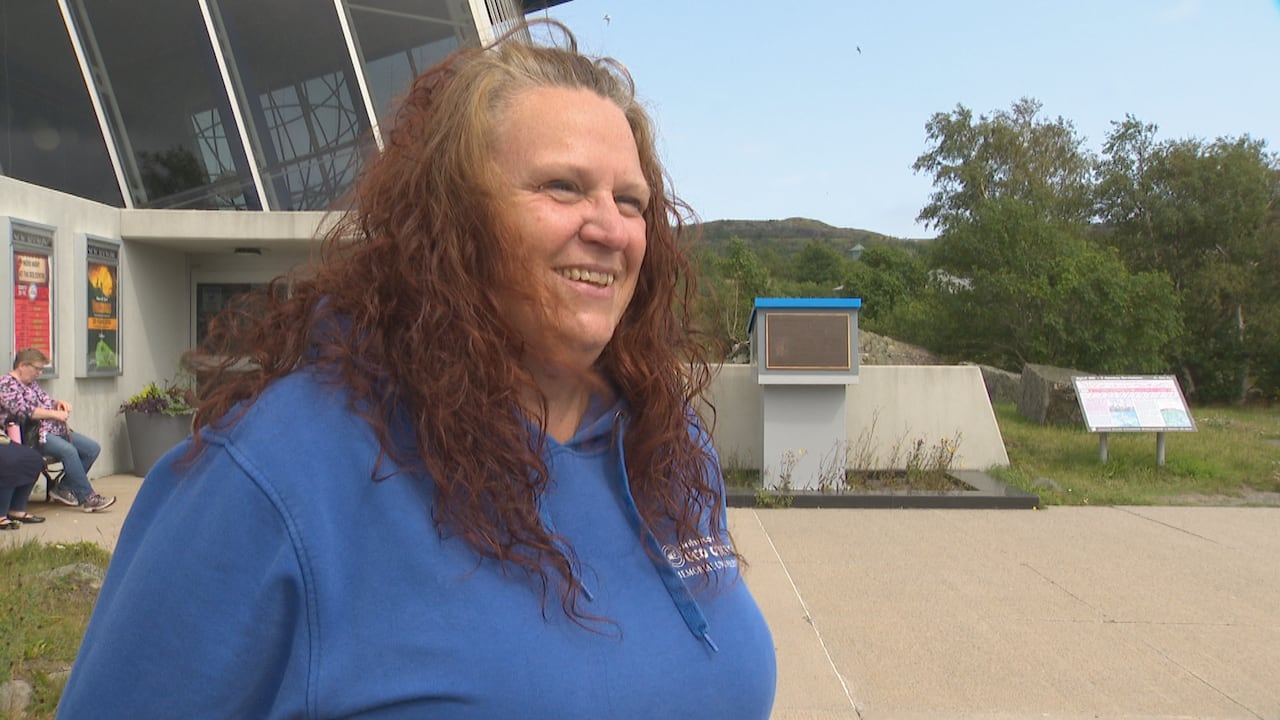
Johnson Geo Centre’s Andrea van Nostrand is hoping the weather will co-operate so there will be a clear view of the partial solar eclipse. (Ted Dillon/CBC)
‘Pretty spectacular’
The head of education and interpretation at the Geo Centre mentioned before the event that there would be activities for children to craft solar viewing devices to ensure they don’t look directly at the sun.
“Experiencing it is truly spectacular,” Andrea van Nostrand told CBC News on Tuesday.
“It’s not every day you see something moving across the sun like that, and with the glasses and viewers… It’s phenomenal.”
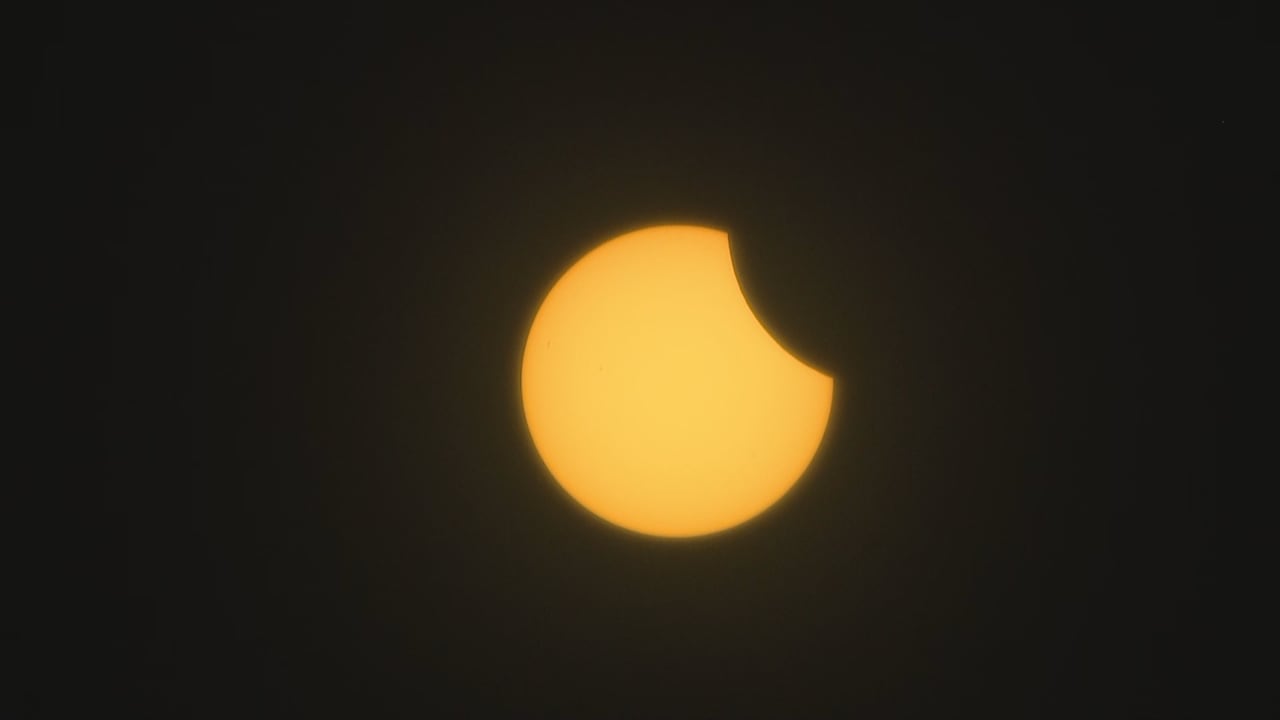
A partial solar eclipse is shown from St. John’s on Aug. 12, 2026. (Ted Dillion/CBC)
A total solar eclipse will be observable across Greenland, Iceland, and Spain, along with a very limited area of Portugal.
Been there, saw that, want to see it again
The total eclipse witnessed two years ago inspired mother and daughter, Jennifer Waye and Gabriela Fuentes Waye, to journey to Europe to experience the total solar eclipse in Spain.
“It’s going to be breathtaking and quite crowded, so we’ll be sharing that moment with many others,” Fuentes Waye expressed over Zoom while in Mallorca, Spain on Tuesday.

Mother-daughter duo Jennifer Waye and Gabriela Fuentes Waye travelled to Spain so they could witness the total solar eclipse. (CBC)
Waye mentioned they chose to view the eclipse in Spain not only due to a family connection but also because of favorable weather conditions.
“Rain and cloud cover are infrequent, so there’s a 99 percent chance the weather will be clear,” she noted.
In Canada, regions further north and east were anticipated to experience a more comprehensive solar eclipse. Alert, Nunavut, was projected to have the most favorable view in the country, with 94 percent of the sun obscured.
Download our free CBC News app to sign up for push alerts for CBC Newfoundland and Labrador. Sign up for our daily headlines newsletter here . Click here to visit our landing page.