

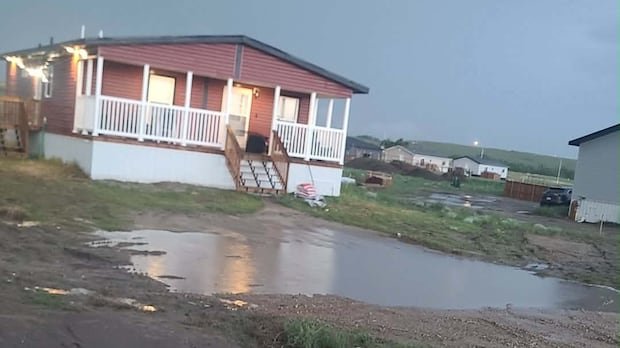

Vanessa Big Eagle, a band councilor overseeing housing for the Pheasant Rump Nakota First Nation, experienced significant damage to her own home due to severe weather conditions. Reflecting on the situation, she mentioned that while they are accustomed to extreme weather events, the unusually strong winds in May caused extensive destruction. The recent weather phenomenon impacted 23 out of the 54 homes in her community, located 160 kilometers southeast of Regina. Notably, her own house suffered the most damage as a large portion of its roof was blown off by the winds.
In response to the damage, insurance claims have been filed for the affected homes managed by the First Nation. Unfortunately, a considerable number of homes are still in need of repair, leading one family to seek temporary accommodation in a hotel. Vanessa Big Eagle expressed concerns about the recurring nature of such weather events and the financial implications, questioning whether they should now factor such losses into their annual budget.
Recent data indicates a surge in insured losses in Saskatchewan due to severe weather occurrences, potentially resulting in increased insurance premiums. Catastrophe Indices and Quantification Inc. reported that last year saw the highest dollar amount of insured losses from severe weather events in Saskatchewan since 2008, totaling $450 million. Notably, extreme winds in June caused the most significant insured loss in the province, amounting to $240 million, followed by wildfires in the north during the previous summer.
Laura Twidle, the president and CEO of Catastrophe Indices and Quantification Inc., highlighted the exceptional nature of the past two years in terms of insured losses. She emphasized the severe impact of fires and the subsequent financial burden, signaling a shift in the insurance landscape.
Jason Thistlethwaite, a professor at the University of Waterloo, emphasized the potential ripple effects of increased insured losses on insurance premiums and coverage. He stressed the importance of focusing on proactive measures to mitigate property damage rather than solely relying on insurance for recovery post-disasters.
Amidst the rise in extreme weather-related damages, repair companies like Leeway Mechanical Inc. in Oxbow, Sask., are witnessing a surge in service requests to address weather-related property issues. The company has observed a substantial increase in workload due to repairs ranging from water extraction in basements to roof patching. Similarly, restoration company Fire & Flood has experienced a spike in calls, particularly in response to basement flooding incidents, attributing the trend to severe weather patterns.
Chris Kaban, the operational manager for Fire & Flood, noted the weather-related challenges prompting an increase in staffing levels within the company. The surge in demand for services has necessitated an expansion of their workforce from 85 to 150 employees over the past few years, reflecting the growing impact of severe weather events on property damage and restoration needs.
The collective experiences of individuals and businesses in Saskatchewan underscore the pressing need to address the implications of severe weather events on property damage, insurance costs, and the necessity for proactive risk management strategies.