

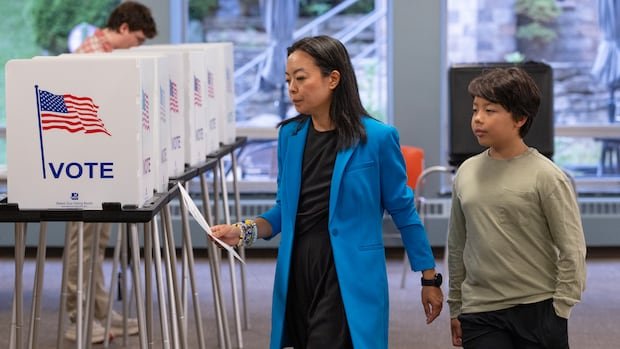

As the U.S. approaches the midterm elections, a challenging primary season has deepened a divide between the insurgent progressive and centrist factions within the Democratic Party. The upcoming contests will determine control of Congress in November and potentially impact the 2028 presidential race.
Centrists advocate for candidates promoting moderate and realistic policies as a strategy to gain Republican-held seats. In contrast, progressives argue that uninspiring establishment candidates may not rally a coalition of young people, working-class individuals, and diverse voters crucial for the party’s success.
Hans Noel, an associate professor of Government at Georgetown University, expressed uncertainty about which group holds greater appeal. He noted that while progressive candidates may alienate some traditional Democratic voters, they could attract new supporters, including non-voters.
Factors like personal charisma also play a role, making it challenging to predict outcomes accurately. Recent primary elections have showcased victories and setbacks for both progressive and centrist candidates.
In Wisconsin, the moderate candidate, David Crowley, narrowly defeated Francesca Hong, a self-described Democratic Socialist. Hong faced criticism for past statements advocating for defunding the police and other controversial views. She was not endorsed by prominent progressive figures like Rep. Alexandria Ocasio-Cortez and Sen. Bernie Sanders.
Moderates also secured wins in Washington and Missouri, while progressive candidate Abdul El-Sayed triumphed in Michigan with support from Ocasio-Cortez and Sanders, despite facing significant financial backing for his opponent.
Amidst discontent among young voters, progressive wins are seen as a significant shift within the Democratic Party. Bhaskar Sunkara highlighted that candidates like El-Sayed resonate with working-class voters and represent a departure from previous divisive stances.
As the debate continues on the party’s direction, progressives are reassessing positions that could deter voters in key battleground states. While the left energizes its base, moderates emphasize the need to appeal to a broader spectrum of voters to secure electoral victories.
The upcoming midterms present a crucial test for the Democratic Party, with implications for future elections. Despite internal divisions, the party aims to capitalize on favorable conditions, including low poll numbers for Trump and public discontent with his policies, to achieve success in the upcoming elections.