

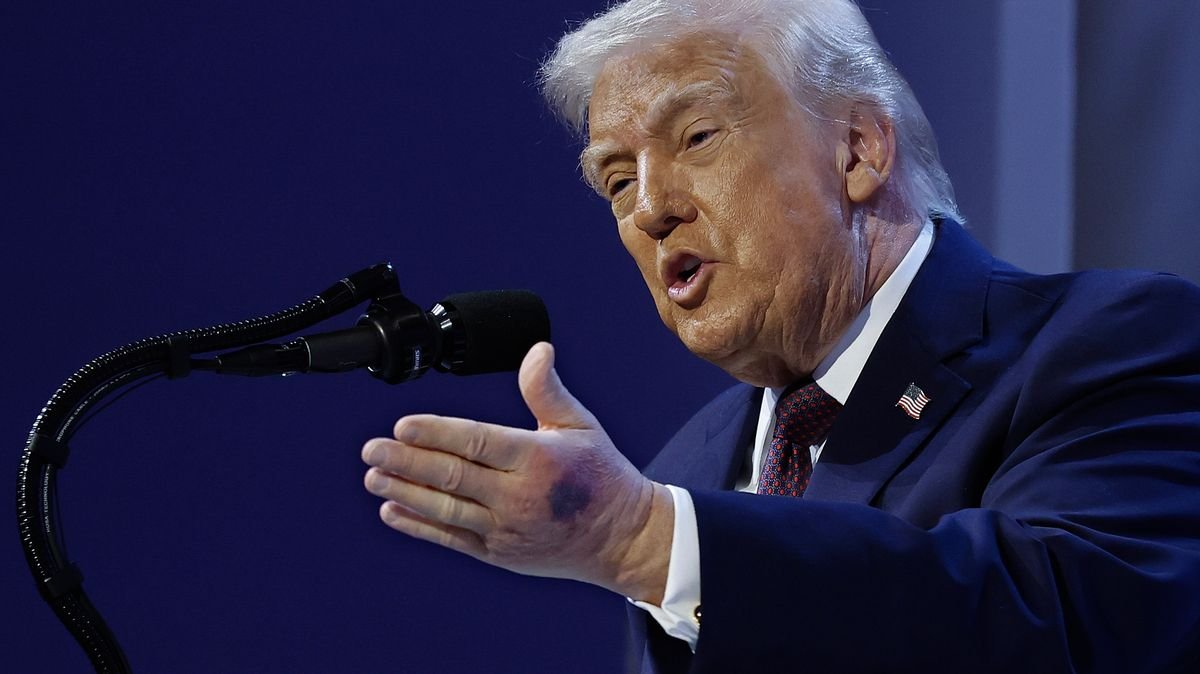

US President Donald Trump displayed a significant bruise on his hand today, sparking discussions on potential causes such as medication side effects and age-related skin fragility. This incident follows Trump’s recent confusion between Greenland and Iceland during a speech at the World Economic Forum (WEF).
Photographs taken during a signing event in Davos revealed a large bruise on the back of Trump’s left hand, extending from the knuckle of his middle finger to the base of his thumb. The bruise exhibited redness at the edges and a black-blue hue at the center, with slight puffiness in the surrounding area.
The White House attributed the bruise to an accidental impact on the signing table during the event, noting Trump’s increased susceptibility to bruising due to daily aspirin use. White House press secretary Karoline Leavitt clarified that the bruising became noticeable over a 10-minute period at the Board of Peace ceremony.
A pharmacist highlighted that aging can lead to easier bruising as the skin becomes thinner and loses protective fat, making small blood vessels more prone to breakage. Additionally, daily aspirin intake can heighten the likelihood of bruising by delaying blood clotting after minor injuries.
Previous claims by Leavitt suggested that Trump’s bruising could stem from tissue damage caused by frequent handshakes. Concerns over Trump’s mental acuity resurfaced following his repeated confusion between Greenland and Iceland during the recent WEF address, prompting renewed scrutiny on his cognitive capabilities.
Despite past assurances of his mental acumen, Trump’s verbal slip-ups and suspected cognitive decline have raised concerns among experts, pointing to potential signs of dementia. While Trump maintains having performed well on brain function tests and received a clean bill of health from his physician, ongoing observations fuel ongoing debates about his mental fitness.