
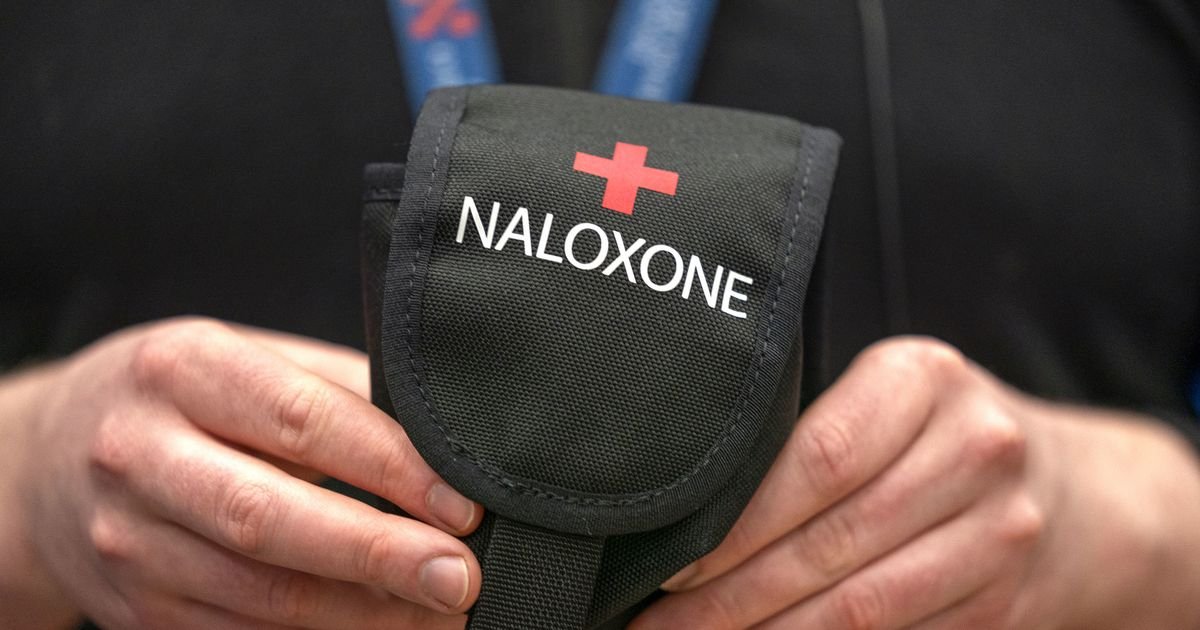

The government has announced plans to increase the availability of life-saving medication for drug overdoses in homeless shelters and to the general public.
Ministers are considering providing naloxone, a prescription-only medication that can temporarily reverse opioid overdoses, to hostels, day centers, and services catering to individuals experiencing homelessness. Additionally, the government is exploring the possibility of delivering naloxone to emergency personnel at organizations like Border Force and the National Crime Agency. They are also looking into installing accessible emergency boxes, similar to defibrillator cabinets, on high streets and near nightlife venues.
Health minister Karin Smyth emphasized the importance of naloxone in preventing drug-related deaths, stating that it can give individuals the opportunity to seek treatment and rebuild their lives. The government aims to make naloxone more readily available to those who need it most during critical situations by revising regulations and enabling individuals who encounter opioids in their line of work or members of the public facing emergencies to potentially save lives.
In a recent move, the government expanded the list of emergency service professionals authorized to supply take-home naloxone, which now includes police officers, paramedics, and probation workers. This expansion is part of a broader effort supported by homeless charities to save more lives, as outlined in the government’s £3.4 billion fund for drug and alcohol treatment services.
According to DHSC, drug-related deaths in England and Wales have doubled since 2012, with a record 5,448 lives lost last year. Notably, deaths involving nitazenes, a synthetic opioid, have risen significantly from 25 reported deaths in 2023 to 180 in 2024.
Sean Palmer, the Executive Director of Strategy and Transformation at St Mungo’s, commended the decision to enhance access to naloxone, emphasizing its critical role in supporting individuals experiencing homelessness who are using opioids. Palmer highlighted the importance of naloxone in saving lives, aiding in recovery, and facilitating the journey out of homelessness.
He further noted that substance use often serves as a coping mechanism for individuals facing complex physical and mental trauma, which can both contribute to and result from homelessness.