

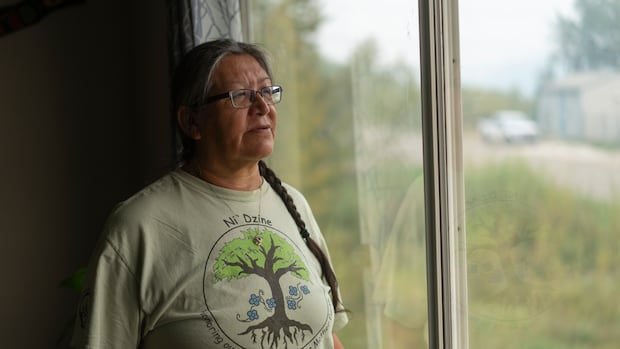

Jean L’Hommecourt often gazes out from her residence in Fort McKay towards the Athabasca River, only to find the horizon obscured by thick dust.
Blowing particles of grit cast a dull brown hue across the sky. This community, nestled in the epicenter of the oilsands, is situated approximately 55 kilometers north of Fort McMurray, Alberta, and is encircled by surface mining operations and industrial activity.
“When I look north, the sky appears tainted,” remarked L’Hommecourt, who has served as an environmental manager for the Fort McKay First Nation and has a long-standing background in traditional land use research.
“You can observe it rising from the mines,” she added. “The wind is inescapable.”
Recent peer-reviewed studies featured in Atmospheric Pollution Research indicate that Fort McKay experiences disproportionately elevated levels of dust pollution, with readings often surpassing set regulations for air quality.
The researchers discovered that the Indigenous community is frequently subjected to severe dustfall incidents caused by large dust particles—coarse, heavy grit that settles over the area during brief but intense bursts that conventional monitoring fails to capture.
The study, spearheaded by Kristin Iorio, a PhD candidate at the University of Toronto, along with independent researchers in Alberta, cautions that continuing to depend on standard air quality monitoring will leave the actual effects of dust pollution on Fort McKay—and other communities located downwind of extensive resource extraction—unclear.
Iorio noted that the majority of the dust affecting the northeastern Alberta community arises from large particles that are not accounted for in Alberta’s air quality standards.
“We lack knowledge in this area, which poses a significant risk,” she stated. “What remains unknown can certainly harm us.”
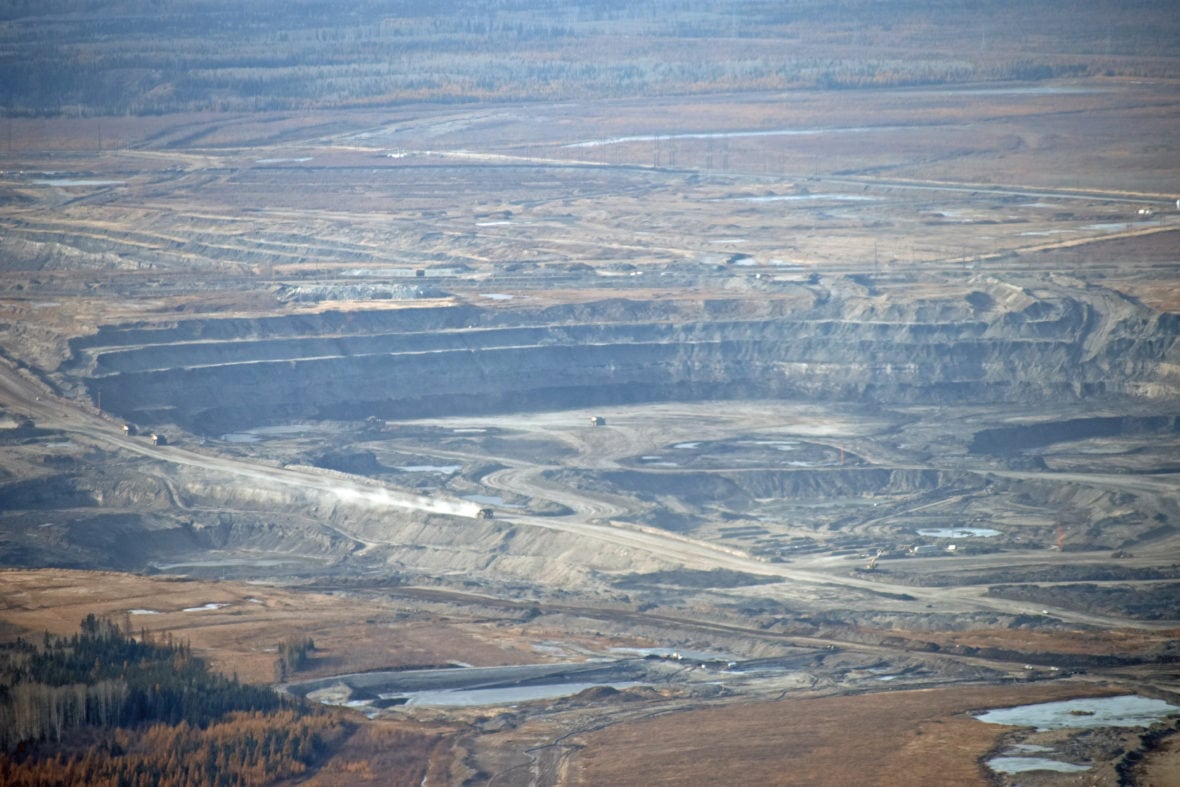
Fort McKay is encircled by surface mining and industrial developments, including this oilsands mine in the Regional Municipality of Wood Buffalo. (Geneviève Normand/CBC Radio-Canada)
Findings revealed that monthly dustfall levels in Fort McKay were significantly higher than those in other areas across the Wood Buffalo region.
Over a span of 24 months, the monthly dustfall recorded in Fort McKay exceeded Alberta’s Ambient Air Quality Guidelines 17 times, surpassing the acceptable level nearly 20 percent of the time.
Evaluating Dustfall and Ambient Sampling
To assess the extent of dust exposure, researchers examined data gathered from late 2022 to mid-2025 by the Wood Buffalo Environmental Association and the Fort McKay Sustainability Department.
Much of this information was collected using open plastic buckets designed to catch dust as it fell. Additionally, samples were taken using ambient air quality monitoring equipment—optical air monitors and 24-hour Teflon filter samplers—to evaluate particulate matter pollution across the area.
Sampling was conducted in five communities: Fort McKay, Fort McMurray, Anzac, Janvier, and Conklin. Dustfall buckets were also strategically placed throughout Fort McKay, including in backyards and the local industrial area.
Among all the locations studied, Fort McKay experienced the highest dustfall—approximately double that of Conklin, which lies more than 150 kilometers south of Fort McMurray.
“Communities impacted by larger dust particles are falling under the radar because there is no monitoring for these larger fragments,” Iorio pointed out.
The Regulatory Oversight Gap
In Alberta, regulations and monitoring focus on PM2.5 levels—minute dust particles measuring 2.5 micrometers or smaller. This fine particulate matter, which includes emissions from smoke and vehicle exhaust, is small enough to infiltrate deep into the lungs and enter the bloodstream.
However, the province lacks specific regulations for particles greater than 10 micrometers (PM10), which are coarse dust particles that can become trapped in the nose or throat.
Iorio explained that this coarser dust pollution typically originates from industrial facilities, construction activities, and mining operations. Other local sources within the oilsands include land clearing, haul road traffic, limestone quarrying, and tailings ponds—a situation likely to worsen as mining operations expand and climate change dries out the area.
“The absence of regulation for these larger particles creates a void in oversight,” Iorio stated.
“Even large particles can pose health risks, as we remain unaware of their composition.”
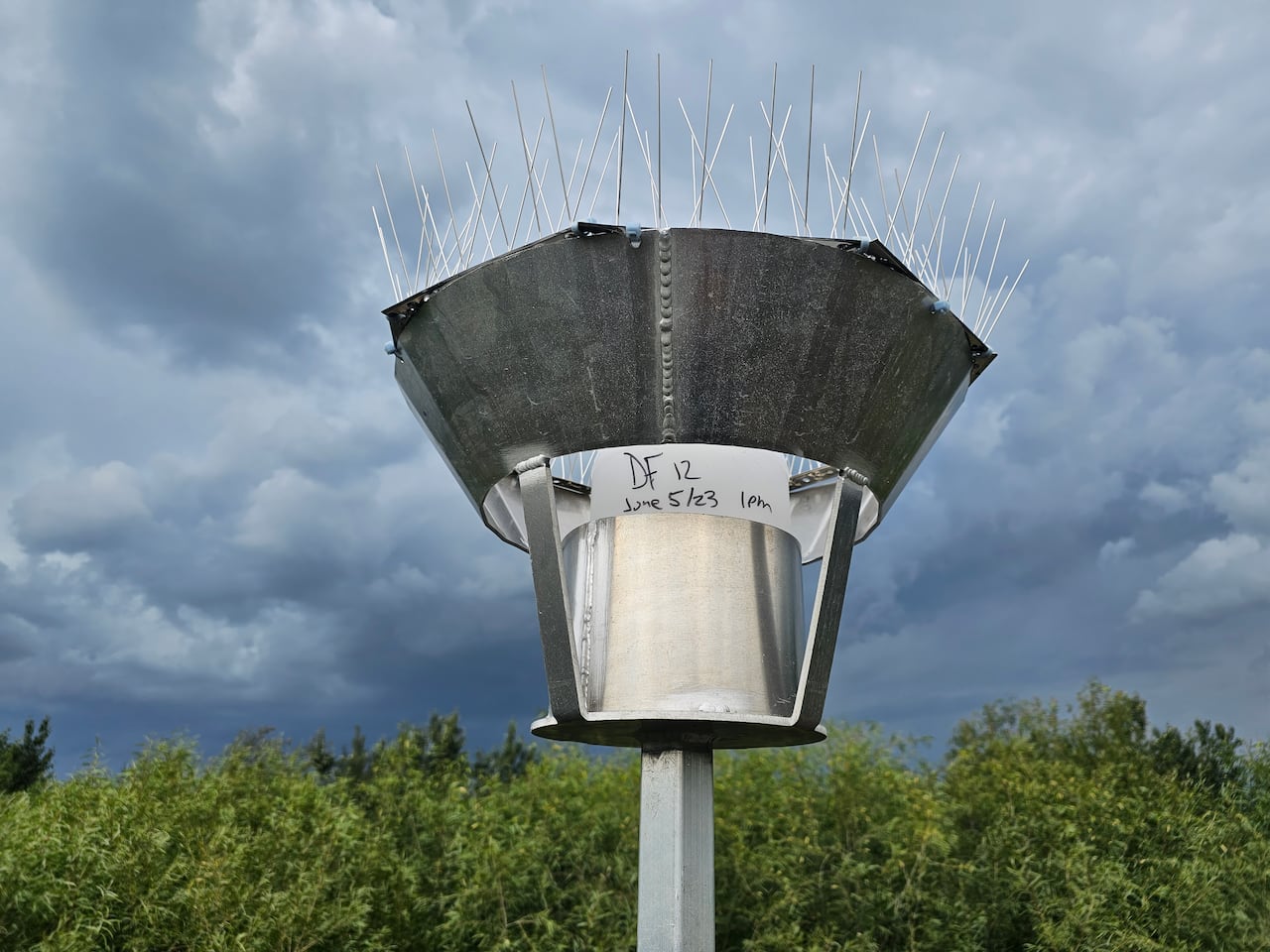
Dust collectors, equipped with bird deterrent spikes, were deployed across Fort McKay and surrounding communities in the Wood Buffalo region. (Submitted by Kristin Iorio)
To tackle these regulatory shortcomings, the authors of the study advocate for significant reforms in how Alberta oversees and monitors industrial dust.
Iorio emphasized that the province should implement a formal hourly Alberta Ambient Air Quality Objective for PM10 contamination to capture fleeting, intense dust incidents that are currently unmonitored. She also noted that Alberta’s existing air quality standards for dustfall and airborne particles have not been revised since 1975.
In Fort McKay, she indicated that enhanced monitoring is essential, which includes ongoing dustfall collection coupled with real-time tracking to identify the specific sources of dust and alert residents when conditions become dire.
‘A Mismatch’
Ke Du, a professor at the Schulich School of Engineering, University of Calgary, specializes in air quality, atmospheric emissions, and particulate matter research.
He remarked that his research aligns with the study authors’ calls for improved continuous monitoring and updated ambient air guidelines.
He noted that industrial pollution, encompassing dust and greenhouse gas emissions, can occur in highly episodic bursts—events that Alberta’s ambient monitoring guidelines fail to capture.
“There exists a disconnect between dust pollution and traditional monitoring methods,” he noted.
“Beyond dust, other pollutants may face similar challenges. Thus, if we aim to develop a monitoring program, continuous monitoring is crucial.”
The contamination levels observed in Fort McKay are alarming, he added. Further investigations in the area are necessary to explore the dust issue and its potential health ramifications for the community.
Neither the Alberta Energy Regulator nor the Fort McKay First Nation offered comments regarding the research paper.
Officials from Alberta Environment stated that they will consider the findings along with the broader scientific evidence as Alberta assesses whether adjustments to monitoring strategies, ambient air quality objectives, or guidelines are needed.
According to ministry officials, Alberta utilizes various indicators and programs to evaluate dust-related conditions and air quality in the area and is also supporting Fort McKay’s community-driven dust-monitoring initiative.
For long-time residents such as L’Hommecourt, the findings validate what the people of Fort McKay have been reporting for many years.
Community leaders and researchers have frequently questioned the adequacy of current air quality monitoring systems in Fort McKay, with prior studies raising alarms regarding air quality concerns.
“I am deeply concerned for the wellbeing of my community,” expressed L’Hommecourt.