

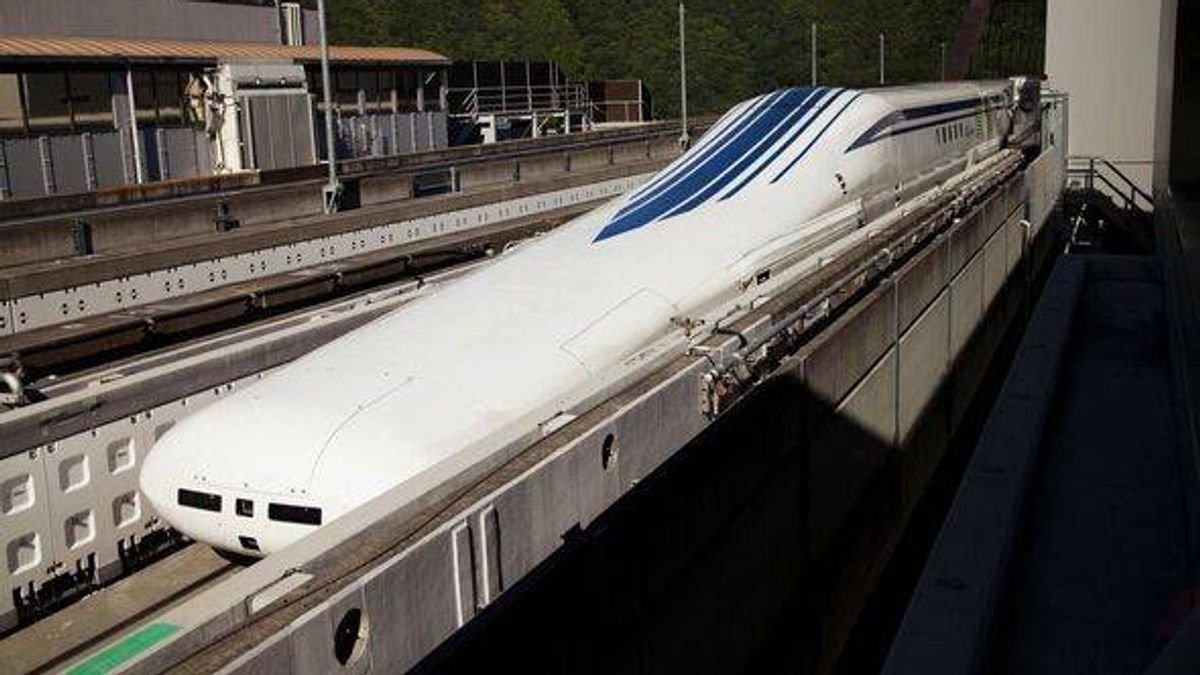

A high-speed train currently in the works may soon transport passengers from London to Edinburgh in just about an hour. Known as the L0 Series, this Japanese innovation is an electric train capable of achieving speeds of up to 375mph, making it the fastest train globally.
This cutting-edge machine, currently in the testing phase, utilizes Maglev technology for propulsion. Maglev functions by using magnetic levitation to hover the train above the tracks and then utilizing another electric motor for moving forward. These trains essentially float through the air propelled by magnets and electricity, enabling them to achieve remarkable speeds.
The L0 Series is no different, as Top Gear reveals that once operational, it is expected to cruise at approximately 311mph, allowing it to journey from Tokyo to Osaka in about an hour.
If the L0 Series becomes operational, the travel time from London to Penzance in Cornwall would be just under an hour. The same duration would apply for a trip from London to Edinburgh. Currently, the train journey between these iconic UK destinations takes nearly five hours.
Apart from its speed, the L0 Series has accomplished other impressive feats. In April 2015, it covered a remarkable 2,525 miles in a single day, equivalent to traveling from London to Sulina in Romania and back.
However, this remarkable engineering achievement comes at a significant cost. The project has been delayed by eight years due to escalating costs, totaling a staggering £52 billion.
The Chuo Shinkansen line, which will accommodate the train, will connect Tokyo and Nagoya.
“The maglev project has faced challenges in excavating tunnels required for the train’s high speeds,” reported The Asahi Shimbun.
Approximately 85% of the project involves tunnels, according to a board member from the overseeing firm.
JR Central’s board approved the revised budget on October 29, with the organization noting that the 2035 completion deadline is tentative.
In the UK, the Government has announced the revival of Northern Powerhouse Rail (NPR), aiming to enhance travel between northern cities for passengers.
This initiative will allow quicker journeys between cities such as Leeds, York, Bradford, Sheffield, Liverpool, Manchester, and back compared to previous travel times.
An initial £1.1 billion has been allocated for planning and preparation, with construction not expected to start until 2030. The program is set to receive £45 billion in improvements, including a new railway station in Bradford and upgrades to several existing stations.